The Genealogy of the Galiffe (Galifre) Family
A Chronicle of the Second Millennium
Notes on the Genealogy
Of the
Galiffe (Galifre) Family
The genealogy of the Galiffe family was translated into English by Colonel Augustus Henry Deane CIE in 1916. Credit must be paid to all descendants of the family during the last millennium for their care in recording, documenting and the safe keeping of all events relating to all members of this ancient family. A great deal has been lost or destroyed during the French revolutionary troubles and frequent migration of the family through Southern Europe and the English Colonies; with most of its male descendants taking up military service.
This genealogy is a translation from ‘Notices Genealogiques sur les Familles Genevoises, tom II’, and first published by Colonel Gustave-Amedee (Aymon) Galiffe in Geneva in 1890. A collection of published books, papers and personal letters of some family members are contained in the Geneva Museum and the British Library and the Department of Manuscripts in the British Museum. A reference sheet can be found at the end of this genealogy.
The first member of the family to produce a ‘Chronicle’ in good Latin on parchment was the monk Hunald at the end of 1000 or early 1100 at the Abbaye de St. Oyens de Joux. He explains the vicissitudes of the House since their expulsion from Salerne in 1075 by the Norman Robert Guiscard as he plundered the kingdom. This seems to be the last time that the House was forced to migrate since Waifre (Gaifre) was assassinated in 768 whilst engaged in guerrilla warfare against Pepin the Short. Waifre, Duke of Aquitaine, will like his grandfather Eudo and father Hunald (having then retired into a monastery in 745), be remembered for their efforts in trying to keep their kingdom of Aquitaine and Gascony free from the Mohammedan’s (Saracens) and semi-independent from the Franks. The genealogy and migrations of the dynasty from this date are difficult to piece together, but it is natural that the family retraced their Roman origins and returned as noblemen to Salerne until the Norman conquest of the Empire.
Future members of the family must be aware of the importance of recording, maintaining and safe-keeping of all future family genealogy and documents, in order that they may be passed on to the next generation of descendants of the Galiffe family.
****
1st published by Colonel Gustave-Amedee Galiffe
Geneve : Imprimerie Aubert-Schuchardt 1890
2nd published by Colonel Augustus Henry Deane CIE
Pondicherry : The Modern Press 1916
This publication for the web by Marcus Rodney Galiffe
Ettington : www.galiffe.net 2025
E-Mail Contact: rodney@galiffe.net
Telephone: +44 (0)7790 835767
****
Genealogy of the Galiffe Family
The Genevese orthography of the name has not varied by one syllable since the beginning of the seventeenth century, which is rather uncommon in Geneva. Besides, in earlier times, in Geneva and Savoy during the fifteenth century, and in Dauphine during the fourteenth century, the name only varied as to the number of l’s or f’s. Few names so simple have met with such difficulty in being accepted correctly, even by an educated public. Even now many people add to it the letter ‘r’ which was formerly found in it and write and pronounce the name as Galliffer or Galifre. Up to the seventeenth century the name is spelt indifferently, even in the registers of the Council, Galiffrus, Galeffus, Galiffier, Galifort, Galifroz, Galifroux, Gallifrou, and even Voleffroz, etc., etc., some of which forms subsisted up to the end of the eighteenth century in the pet names given to children of the Galiffe families by parents and intimate friends*
These variations in which the type is always the same can be explained by the traditions, the memoirs, and the arms of the family. According to them, the name Galiffre or Galiffe is derived from the ‘Romand’ or old French ‘Waifre’ or Gaifre (Waiferius, Guaiferius) which is a frequent patronymic appellation found only in two dynastic Houses and their descendants, viz.: in the VIIth to the IXth century among the first Dukes of Gascony and Aquitaine, and from the IXth to the XIth century among the ‘Lombard’ princes of Salerne. The Genevese name is not the only one in which this occurs, for it is from the same type that better known names are derived, such as in Italy – Galferi, Alferi Ferino (diminutive of Guaiferio), Gaiferi, Galiferi, Galieffi, Gaglioffi, Galufrio, etc., etc.; north of the Alps, Gaifier; in Spain Gaiferos, Gallafroy, etc., all names corresponding literally to variations of the Genevese name. Other families claiming the same origin, derive their names from other patronymic appellations used by the above princely Houses, viz. the Guaimari, Hunoldi, Azzoni, Ghisolfi, and Trasmondi, in Italy, and Hunaut, Lupe, etc; in the South of France. It is a well known fact that many old Italian families, even in some of the smallest Republics, can trace their origin by authentic documents to the XIth and even to the Xth century. Several of them claimed from their traditions a Roman origin. For instance the above named families descended from the ‘gens’ of the Cisalpine ‘Gallus’ which survived the fall of the Roman Empire for several centuries in Lower Italy and is Southern Gallia.
Other names of the same type, if not of the same traditional origin, existed long ago and belonged to individuals of widely different social positions. For instance we find in Burgundy, in the XIII and XIVth century, a noble family named Galafin. The property of a ‘Gueyfu’ of Cholex, is mentioned in a receipt granted by the Chapter of Geneva in 1537. The name of Antoine Alferio appears as a witness to a Deed regarding a house which Aymonet Asinari and Francois de Medecis, Lombards (Bankers) obtained from the Eveche de Geneve. A document from the commissaire of St. Victor, Geneva, dated 1429 mentions Jean and Antoine Gallifiuz of Passeyrier. Messire Antoine Veferacti is named as one of the clergy of the Diocese in 1451. Fgrege Antoine Gaiffier, Notary, is appointed as Attorney by Louise de Savoie, wife of Francois de Luxemburg Viscount of Martigues (1494).
*See letter of congratulation dated 26th September 1766 from Pierre Thellusson of London (ancestor of the Lords Rendlesham) to Barthelemy Galiffe, on the occasion of the latter’s marriage with his niece Marie Naville de Thellusson, in ‘D’un siècle a l’autre’ Vol. I, pages 134 – 135.
Nicolas, son of Pierre Veyfre (Petri veifri) of Faverges, residing in the parish of Ste Croix, Geneva, was received Bourgeois of Geneva on 10th January 1511 for eight florins. Philibert Galliffe (Philbertus Gallifu) is among the heads of families appointed on 22nd June 1520 to the ‘Council of 50’. (The Christian name is apparently wrong, as there were at the time in Geneva only two men, father and son, Pierre and Francois Galliffe, qualified to sit in the Council) – On 20th February 1571, Donna Louise, widow of Cesar Galiffe, of Raconis in Piedmont, rents a room and outhouse from Sire Amied Mestrezat. On 21st November 1585 the baptism is registered of Theodore, son of Pierre Galiffe, Spaniard, and Lavinie his wife (there is near Barcelona a hamlet called Galliffa). Maitre Pierre Galliffard signs in 1637 as ‘Chatelain de Sotenod and Vauromey’, and ‘notaire tabellion royal du Bugey’. Further on, it will be seen that the Galiffes of Dauphine prove that the name had already taken that French form (Galifii, in Latin) during the XIVth century, as well as the de Galliet or Galifet of Dauphine, Savoy and Provence. Grillet in his ‘Dictionnaire’ historique, III, page 13, mentions that family as having still in his time, representatives in Maurienne. Traditions have been so much abused in Genealogy that it is almost ridiculous to refer to them, perhaps in Geneva more than anywhere else, unless certain proofs exist to corroborate them and unless the legends are not at variance with authenticated facts. This particular family however is traced for centuries, from father to son, and it is so well known to contemporaries of each generation that it would be affectation to ignore these traditions, especially as besides the arms of the family, and the verbal legend referred to, its antiquity is proved by at one least positive document. (Notice sur la vie et les Travaux de J A Galiffe 1856 Supplement).
The Galiffe family have always exercised great care in the preservation of their parchments and documents. When the estate of Noble Louis Galiffe, Conseiller d’Etat, was administered in 1672, these papers, described as ‘old titles and contracts’ filled several large leather bags and it is mentioned that the deceased had them from his father, Conseiller Jean Galiffe, who died in 1622, and that he held them from his grandfather etc; this collection, of a kind seldom referred to in the administration of estates of deceased individuals, at least in Geneva was with many other precious objects, pillaged, scattered and partly burnt in the revolutionary outrages of 1793, and 1794, when the Galiffe family, in the absence of its male members who had all emigrated and taken military service abroad, was only represented in Geneva by Melle Andrienne Galiffe, daughter of the late Syndic, Noble Jean Galiffe. However, a number of these deeds are still in existence and as they were numbered in chronological order it is possible to form an approximate idea of those which are missing*. Among these, and probably the oldest, was what the family called the ‘Chronicle or genealogy’, an old parchment of the end of the eleventh or the beginning of the twelfth century, in which a monk of the Abbaye de St. Oyens de Joux (St. Claude, in Jura) named Hunald, related to his kinsmen and especially to a nephew of his, in good Latin, the vicissitudes of the House, expelled from Salerne some twenty years before, by the conquests of the Normand Robert Guiscard (1075).
*In this enumeration the marriage contract of No Pierre Galiffe and Suzanne de la Rive of 26th December 1687, is numbered 57. Up to that time there are many blanks which have been filled up as much as possible by fresh official extracts. Only a few papers of the XIV and XVth century are found, but several remain which are much more ancient referring to early marriages and some of them are very interesting apart from their importance as family records.
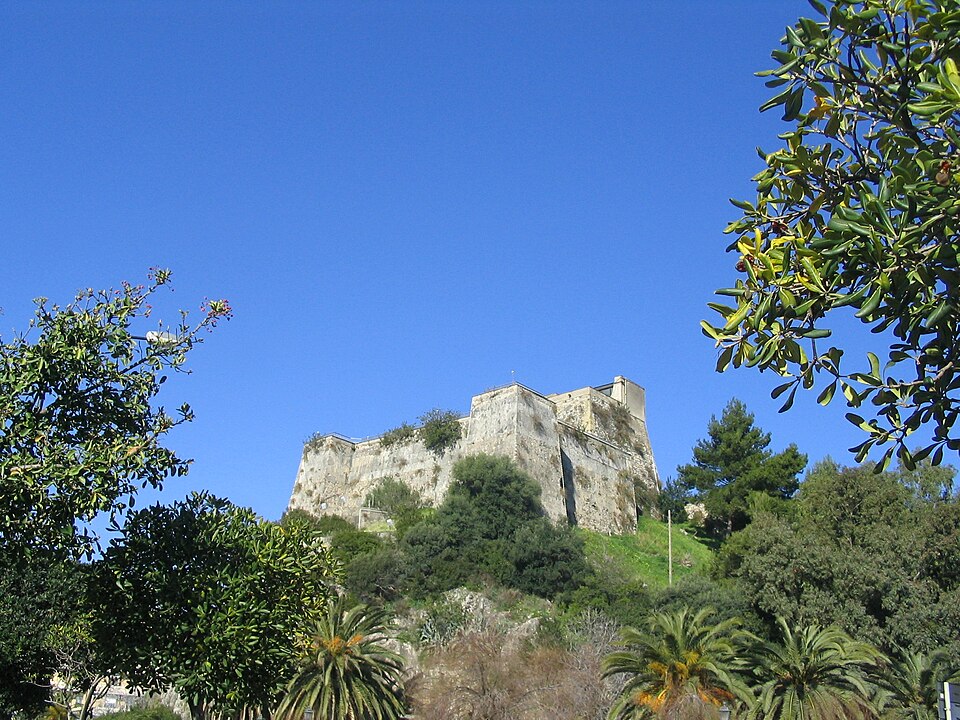
A hill fort in Salerno situated somewhere near where Guaiferius, Prince of Salerno (835 to 880) fought the Saracen armies.
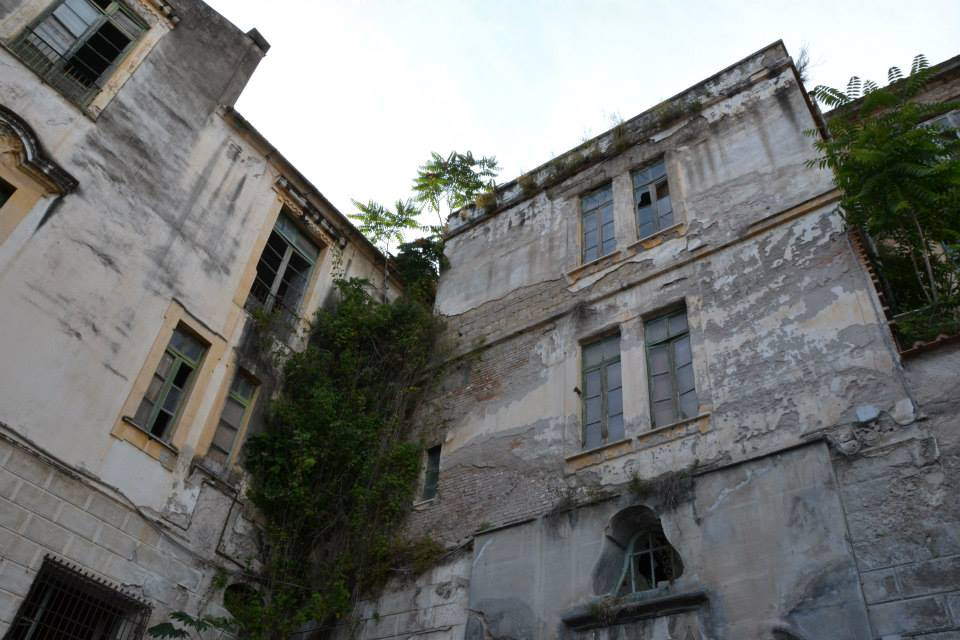
Palazzo San Massimo in Salerno
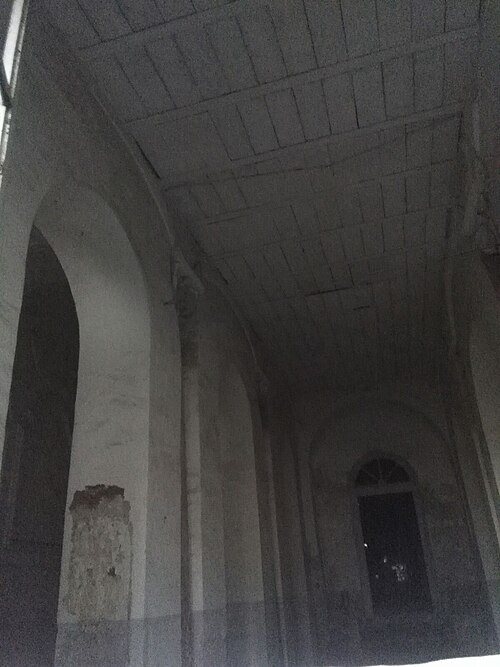
Deconsecrated Church of San Massimo. The original columns were reinforced with pillars. an inscription “GUAIFERIUS PRINCEPS INSTINCTU FLAMINIS ALMI DUO HAEC STRUXIT PULCHRA DOMUS” translates as “Prince Guaiferius, by divine inspiration, built these two things, the beautiful walls of the house” (Circa 860)
In their flight or emigration, the last representatives of that branch had reached Burgundy who’s Count was one of their relations, but not till they had sojourned some time in the North of Italy, notably at Ivrie, and at Saluces, where a gate called ‘porta Gaifera’ retained its name till the end of the last century*. This document which is mentioned in several inventories still existed till the end of the eighteenth century in the hands of Conseiller d’état Noble Barthelemy Galiffe, and it was during a mission to Paris (before the pillage of the Revolution) that the precious document was partly destroyed by the owner’s mother, the widow of syndic No Jean Galiffe (nee Anne Rilliet) who naively used it for household purposes. The syndic had commemorated the principal events of the chronicle in 1758, by a gold medal bearing his arms suspended to the Prise Cup of the ‘Exercise de l’Arquebuse, the most national of all our military Associations, of which he was the ‘Segneur Commis’ or President. The medal which is well known, is still represented on the Cup, and bears the motto: ‘Nobles at Rome, Kings at Toulouse, Princes at Salerne, Citizens at Geneva, ever loyal’.
Since this mutilation which was completed by the vandalism of 1794, there only remained of the original document, besides the certain proofs that it had existed, fragmentary copies, relating to No Pierre Galiffe, allied to the de la Rives (1650-1733) the father of syndic Jean Galiffe, a very important beginning of a fac-simile, several substantial extracts, attempts at genealogical trees, etc. It is from these debris, scattered among various descendants, and from recollections of his father Conseiller d’état No Barthelemy Galiffe, that the more essential parts of the original have been reconstructed by our predecessor. In order to increase the intrinsic value of the work he made a careful study of the times, the countries, the persons and the facts referred to in the chronicle. As many of those did not figure in any printed History, and as several seemed to contradict events which were conventionally admitted, the author went and closeted himself for several months (1816-1817) with the archives of Salernes, especially those of the Benediction Convent of Santissima Trinita della Cava, the most important (bracketed with those of Mont Cassin and of Faria), for the historians of the Lombard dynasties of Southern Italy, expelled by the Franks and the Normands. It was there that J A Galiffe had to verify his notes and family traditions and he arrived with a letter of introduction from H E the Archbishop of Farenti, the liberal and learned Monsignor Capecelatro to whom he has been recommended by a mutual friend, Professor Cheneviere Senior. The Abbot of la Cava was then the Very Rev. Carlo Mazzacane who had been appointed under the old regime, under which he drew formerly an income of 34,000 ducats and kept open table daily for 100 poor, besides the hospitality which he had officially to offer to strangers. In 1817 the King of Naples had only conferred on the convent what had not been alienated under the French Regime, that is to say about a quarter of the former income.
The convent had only been spared for the sake of its archives, which contained from 40 to 50 thousand Acts from the VIIIth to late in the XIVth century, all ticketed and numbered. This was the work of two famous archivists – Father Meinier whom Pope Urban (of the House Barberini) rewarded by giving him his own armorials and the hereditary title of Apost lic Protonotary – and Father Don Salvator Maria de Blasio who compiled the critico- diplomatic annals of the Kingdom of Naples in collaboration with Father Alexandro di Meo, one of the best authors in that line of work, if not for style and form, at least for the method, which is quite worthy of the modern documentary school. The Archivist at the time was Don Luigi Maricola who was then engaged on a glossary of Lombard Latin, for which Galiffe subsequently gave him a quantity of material.
*Muletti, Storia di Saluzzo e du suoimarchesi, 1829.
Galiffe was received most cordially by these two dignitaries of the convent who were delighted that a stranger, even a Protestant, set such a value on the records committed to their care. Having taken a lodging in the small ruined town of Corpo di Cava, named after the Convent, Galiffe set to work to decipher the old Lombard documents, a very difficult task as the characters varied according to the difficult task as the characters varied according to the different periods and localities. The enormous quantity of work that he managed to get through in a few weeks, at the rate of twelve hours a day reflects great credit on his learning and his astonishing aptitude. Some of the results of his researches appear in the second Volume of his ‘Italy and its Inhabitants’ 2 Vol Octavo T Murray, London 1820 – and in his ‘Letters on the Middle Ages’ addressed to the famous Councillor and Professor Schlosser of Heidelberg (author of the Heidelberger Yahrbucher 1839). Galiffe only set to work after depositing his family memoirs in the hands of the Abbot and of the Archivist, and after drawing their attention of the points which he wished to elucidate. He then invited them to examine and control the results of his search. These appeared so conclusive to the two dignitaries (and to other savants who studied them) that they offered to attest them and to have them authenticated free of cost. So much for the explanation of what can only be described as tradition, at least among the public of Geneva, and now we pass to the more immediate antecedents of the family prior to establishing itself in Geneva in the XVth century*.
The family archives of that period are easily controlled and the occasional blanks are filled up by the accidental discoveries of other colleagues, or by more recent publications of our historical ‘Societies’. A very natural question is weather the Galiffes of Geneva and the de Galiffets of France which all resided during the XVth century in the province called ‘Genevois’ are of the same origin, and if so which of the two families has retained the true or at least the more ancient orthography? This much is certain – notwithstanding that difference, three successive generations had the same Christian names, Jean, Jacques and Amedee and resided in the same localities in Savoy, and at least for one of these generations and localities there is no possibility of a doubt, as the proofs of these antecedents come from different sources which the respective families had no opportunity of communicating to each other. This is explained by the fact that for three and a half centuries these families were widely divided, one being republican and protestant, the other royalist and catholic, and were only connected with Geneva by one event, the ‘Escalade’ in 1602, when one of the de Galiffets, Soupfre, son of Bonaventure Galiffet, from Saint-Laurent, figures among the Savoyards Noblemen captured, hanged and decapitated, while the Galiffes were fighting for the Genevese fatherland. As regards evidence anterior to the XVIth century, so far as the French family is concerned, since its title deeds were destroyed in the troubles of the ‘League’ and the burning of the archives of the Parliament of Grenoble, it rests only on the semi-official researches of experts such as d’Hozier, de Courcells, Borel d’Hauterive and others in connection with confirmation and acknowledgement of certain rights, such as the acquisition of the principality of Martigues by one of the de Galiffets towards the end of the XVIIIth century. From these researches, mentioned in the last edition of d’Hozier and published in full by Didote, it is established that the antiquity of this family
*The travelling companions of Galiffe from Naples to Salerne, and to la Cava, were Mr & Mme Favre-Bertrand, Simonde de Sismondi, and especially Mr Nightingale, father of the famous Florence Nightingale so well known by her work in the Crimean War. Here follow two letters from the Abbot Mazzacane to J A Galiffe, dated 16th & 20th May 1817, one in Italian and one in French, both congratulating him on his erudition, and on the result of his researches, but otherwise of no particular importance (Translator).
goes back to a remote period, but that its origin is unknown; that two of its representatives were members of the ‘Etats du Dauphine’ in 1347, but that the continuous filiation begins only at the end of the XIVth century, both in Genevois and Dauphine, and that since then it is based on documents filed in the ‘Chambre des Comptes’ of Turin.
The Genevese family on the other hand appears to have attached but little importance to its mediaeval pretensions beyond the traditions above referred to, but they are supported by authentic documents partly preserved to this day, and by publications of our learned societies. All these sources concur in proving that the Geneva branch is correct as to the orthography of the name, so far as the three generations of the XVth century are concerned which all signed the same way and probably also as regards its predecessors in the Dauphine, as the only mention of the name is that of Noble Aymar Galiffe (Eymarus Galiffi) which occurs in 1334 among other owners of ‘fiefs’ who had to render homage to the Dauphin. (Inventaire des Archives du Viennois published in 1871 by the Abbe Ulysse Chevalier, No 24, pages 49-50). From this it may be presumed that the final ‘t’ was an incorrect substitution for another letter (r for instance) which may have been there formerly, or that it was an unconscious concession to the meridional pronunciation dating from the establishment of the family in Provence. In stating that it is under the name of de Galliffet that its representatives ‘have during the last three centuries filled the highest posts in the Magistrature, and the superior grades in the Army and Navy, and received their principal titles of nobility’, the French historians have only followed the usual custom of using uniformly the name under which the family has more particularly distinguished itself. It must be admitted however that it is that name and not Galiffe without the ’t’ which was better known from the XVth century in Savoy, and especially in the adjacent districts of Dauphine where it still exists. As we are only concerned here with the Geneva family, we shall be careful to separate in the three generations described by our predecessor, his own version from those given in printed genealogies which were unknown to him.
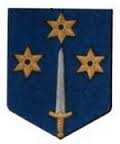
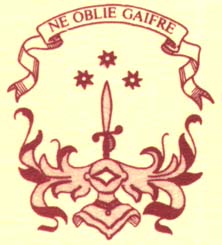
Arms: ‘d’azur a l epee d’argent posee en bal, garde et poignee d’or, accompagnee de 3 molettes d’eperon d’or, 2 en flanc, la troisieme en chef’.
Cimier: ‘une main armee tenant une epee d’argent posee en pal sur le casque ouvert de face, et comme pour l’enfoncer du pommeau, garde et poignee d’or’.
Cri: ‘Je suis Waifre, ou Waiferius sum’.
Devise: ‘Ne oblie Gaifre (in some seals translated as ‘memento Waiferii’)’
Supports: ‘deux lions d’or’.
These arms appear on the Seal of the first Galiffe admitted to the bourgeoisie of Geneva with his initials F. G. (1491-1520).
Note by the translator – For the benefit of those who are not conversant with terms of heraldry, the above description may be translated as:
Shield: ‘On a blue ground, a silver sword with gold hilt, 3 spur-rowels, one on each side and one above’
Crest: ‘a mailed hand holding a silver dagger with gold handle resting on open-vizored helmet’
War-cry: ‘I am waifre’
Device: ‘Do not forget Gaifre’
The above arms are exactly the same as those of the Viscounts de Debuisson, Lords of la Cave in Burgundy, except that they have inlet a golden balance on red ground. The de Gaifier (von Gaifier) received in German nobility ‘in consideration’ of their antiquity and distinguished ‘alliances’ have the same shield, but on black ground and sometimes the top rowel is replaced by a spear-head, but without support, battle-cry or device and the crest is sable plumes. The heraldic record of bonacini of Milan, gives to the Galiffe very different arms, viz. blue shield with silver band across, and a dove holding an olive branch, on left an arm holding a silver sword with gold hilt piercing 2 crowns : above a gold scroll with the motto ‘Gloria et honor solide’. It is quite possible however that these arms may have been imagined, as several others in the same book undoubtedly were. Finally the counts and marquises of Galliffet in France bear different arms, viz. red ground with silver chevron and three gold trefoils. Jaques de Galliffet the representative of the second generation in Savoy is supposed to have caused these arms to be carved above the door of the apartment which he occupied in the Castle of Voiron in Dauphine which he commanded in 1428 and according to the report of a search made in 1730 the shield was still in existence then. It may just as well however have represented the arms of a predecessor or a successor of the said Jaques, or may have been the arms of an allied family or of the Lord of the Manor. A characteristic fact in the genealogy of the Galiffe of Geneva is that (with the exception of a small ramification described as ‘of St. Gervais’ which became extinct very early) the family was perpetuated for four centuries by one single male in each generation, whatever was the number of daughters. This was a great disadvantage, first as regards obtaining high positions in the state owing to the want of support of collateral male relatives, and also as regards maintaining the style demanded by these far from lucrative employments without pecuniary assistance of commercial or industrial enterprises. Notwithstanding this drawback, the family entered the CC (Council of 200) in the second generation (1555) and later was represented in the Council d’Etat (the Executive Council) from 1690 until the Revolution of 1790 which dispersed and ruined the family so far at least as its previous high position was concerned. From their first arrival in Geneva (1491) the Galiffe had for three centuries contracted alliances with the best family all indigenous, except in one case (the noble Humbert of Dijon). Besides contributing many well-known men to the higher magistracy and the bar several members of the family distinguished themselves on foreign military service. It is only in the XIXth century that some of its representatives adopted literature and science as their profession. Others again are remembered by their connection with the ‘Noble jeu de l’arquebuse’ to which we will refer in a note.
For the first three degrees of affiliation we shall utilise concurrently the old Savoyard and Genevese family traditions corroborated by existing documents, and also those given in the printed genealogies of the de Galiffet family – but the latter will only be mentioned between parentheses : the concordance between them rests on facts which may differ but are never contradictory.
I. Jean Galiffe, proprietor at Gruffy in Genevois in 1435 (according to the de Galliffet, Noble Jean de Galliffet was Lord of the Galifetiere? in Dauphine, and Savoyroux in Savoy about 1383, and is mentioned with the title of ‘damoiseau’ in a receipt by his son Jaques, dated 15 September 1424).
II. Jacques Galiffe, who signed himself Jacobus Galife, or Galiffee, imperial Notary, described as of ‘Bruysson’ in the diocese of Geneva, in a judgment given by him on 30th May 1427 at Thonon regarding a suit between the families of de Blonay and de Balmes* was State Secretary to the Duke of Savoy Amedee VII in 1429, and later to his son Louis, and Member of Council of the latter in 1438. He probably signed more charters relating to our Romand districts than any other Ducal Secretary, during the quarter of a century of his office. All the old Genevese genealogists recognize this Jaques Galiffe, as the founder of the family Galiffe of Geneva, which city he visited several times: first in 1429 with Noble Antoine des Dragons, Doctor of Law, Ducal councillor, to settle a dispute pending between the Prince Abbot Francois de Mies, and the citizens of Geneva regarding the plain of Plainpalais, which had been referred to the arbitration of Duke Amedee VIII. These two envoys remained nine days, with their suite and horses in the house of Syndic Noble Henri Servion, to whom the expenses of their entertainment were reimbursed in January 1430. (Fragments historiques sur Grenus, pages 17-18). The same Jaques Galiffe accompanied the Duke Louis in 1440 to Geneva where he signed the requests by which the Duke demanded from the Bishop the right to exercise in the city his jurisdiction over his own subjects, without prejudice to the episcopal jurisdiction. The author of ‘Materials for the History of Geneva’ observes that out of the families of nine members of the Ducal Council who signed the above documents, five were already represented in Geneva, or established themselves there during that century, viz: Bolonnier, Arnaud, Rosset, Chabot and Galiffe. It is generally admitted, as stated by the historian Croisollet, that Jaques Galiffe belonged to Rumilly, or at least that he fixed himself there, for besides signing the confirmation of the franchise of that little town, his name appears several times as intermediary between Rumilly and its suzerains, notably concerning the great fire of Rumilly in 1430 and the claims which ensued and lasted till 1440. Finally his descendants established themselves there. (Histoire de Rumilly, by F Croisollet, p. 59-62). According to Mr Borel d’Hauterive, the de Galliffets claim that No Jaques de Galiffet married Jeanne d’Yse, by whom he had:
(1) Amedee de Galiffet who inherited the land of Savoyroux for which he rendered homage to the Duke of Savoy on 4th February 1465, and whose posterity became extinct in the following generation according to Mr Borel d’Hauterive. This however is an erroneous statement as will be seen later on.
*Letter from the Avoyer, Count of Mulinen, president of Society of Swiss History to Mr J A Galiffe-Pictet. Although unable to fix exactly the place named Bruisson, our colleague Count Amedee de Foras is positive as to its being in the diocese of Geneva. He assures us also that his title of Ducal Secretary conferred on him a patent of nobility. He is referred to as late Ducal Secretary (olim secretarus ducalis) in the same deed as his son Amedee in 1464.
(2) Pierre, the younger son, inherited the land of La Gallifetiere and is said to be the founder of the House de Gallifet, but what is certain is that Jaques, the Ducal Notary of Savoy, was named Galiffe, as was his elder son Amedee who follows.
III Noble Amedee Galiffe, bourgeois of Rumilly in Albanais, proprietor of the house and domain of Savoyroux near Rumilly, on which he hypothecated the dot of his wife in 1467, according to a document by Pierre Jaquemart, notary, of Rumilly. He tendered homage for the Savoyroux property on 17th March 1459. On 3rd March 1464 he sold his Rumilly property to No: Jean Maillard of Rumilly, and he is again mentioned in an Act dated 28th February 1470. Died before 1496.
Married by contract dated 9th February 1467 (Pierre Jaquemart notary) Noble Hugonine, daughter of Noble Jaques de Jutigninge, and sister of No: Jean de Jutigninge, Chancellor of Faucigny. She was the widow by her first marriage of No: Francois de Marcleys, and secondly of No: Jean de Chides, surnamed de Coquina. She was evidently much sought for in matrimony, for she again married a fourth time Petremand Beccu of Seyssel by contract dated 12th November 1496.
The original marriage contract of Amedee Galiffe and Hugonine de Jutignine is still in our possession and it is not the most ancient document in our archives. (Notices genealogiques, Vol. II, p. 233 and Vol. IV, article Jutigninge)1
- Francois Galiffe, also called Galiffus, Galiffoz, Gallifroz, Galliffroux, etc., described as of Gruffy in his reception as a burgess of Geneva, on 8th March 1491 for 8 florins, the usual fee at the time.2 He was among the first members of several ‘General Councils’, from 1493 till 1520 when he died. As already remarked, this is probably the Philibert Galiffe who was appointed on 22nd June 1520 to the Council of fifty, as head of the family. If not, it can only be his son Pierre, – Francois Galiffe married Stephanie (Etienna) daughter of No: Andre Guat, Syndic and of Mye Amedea Festi, described as ‘Noble et puissant dame’ in a Document dated 1512 – grand-daughter of Noble et Magnifique Seigneur Festi, vidomme of Geneva in 1445. She was own sister to the turbulent Councillor No: Louis Festi, squire, who had a feud with the Duke of Savoy and the city of Geneva and made war
1 The Paris Publisher, Mr Henri Bordier, our former friend who subsequently showed an inexplicable aversion to our predecessor and ourselves (see ‘France protestante’) is the only one who has contested this claim by feigning to ignore this document, the authenticity of which he could not dare to impugn.
2 He is there inscribed as a founder of metal (funditor metalli) a trade which he exercised himself and transmitted to his sons, but which was only continued in the younger branch of the family described as of St. Gervais: the business consisted of large works such as bells, cannon, etc. Francois Galiffe was received in the bourgeoisie the same year as Noble Jean de Marcleys, Lord of la Dole, son of Francois de Marcleys, the first husband of Hugonine de Jutigninge who afterwards married No: Amedee Galiffe, so they were half brothers. The de Marcleys were also metal founders, and their name is on the largest bell in St. Peter’s Cathedral, Geneva, called ‘la Clemence’.
against the latter under letters of marque given by the King of Rome (1495) : after two years of hostilities a treaty of peace was signed at the instance of the Duchess Regent of Savoy, the Prince of Orange Jean II of Chalons, the Abbot of St. Claude and several other high personages of the time. His artillery passed to his nephew No: Andre Guat, brother of Stephanie Galiffe in whose property it was captured in 1529 by the Genevese of the Eydguenot party, in what was called the campaign of Cologny.1 This marriage, one of the most brilliant that could be contracted in Geneva as it allied the Galiffe to the richest and highest families in the country (the Guat, Festi, Maillet, de Versonnex, de Fer, de Petigny, de Saix, de Glenne, de Pesmes, Servion, de Sovernier, de Liga, de Veigy, Bolonnier, etc.,) might have driven them into the ducal, or ‘Mameluc’ party, but for the death of Francois Galiffe which left his children helpless, as all their natural protectors were proscribed, and as their mother (re-married to No: Perrin Peyrolier who himself died shortly afterwards in exile) died also in 1531. These children brought up in Geneva in the difficult circumstances of that period, became good citizens, Protestants and republicans. Their step-father left a considerable fortune, which his attorney Pierre Gojon, also of the ducal party, placed under his own name to prevent its being confiscated by the Goverment of Geneva, and the claims to it caused endless troubles, in which Messire Humbert Peyrolier, Canon of Vienna and brother of the deceased, secured on his own behalf the intervention of the Swiss League, the Prince-abbot of Geneva, the Duke of Nemours, and even Francis the First, King of France. (Archives of the Galiffe Family)2 Stephanie Guat, widow of No: Perrin Peyrolier her second husband, died in 1531 and bequeathed to her brother Noble Andre Guat-de Versonnex proscribed in 1527, and thereafter citizen of Lausanne, her ‘nuptial robes’ estimated at 2000 ecus (equivalent to about 100,000 francs at that time) and it may be presumed that this legacy was agreed to by her natural heirs, to compensate him for the loss of his property in Geneva. Francois Galiffe had by Stephanie Guat:
1 See our ‘Bezancon Hugues, liberateur de Geneve’, p. 157 & 158 and note concerning these guns, the capture of which was made the occasion for pillaging wholesale to domain of Guat, although the Council authorising the expedition had ordered that nothing was to be taken except the cannon. (Order of Council 8th February 1529). These orders of moderation were seldom obeyed and it required the intervention of the leaders of the League to obtain the restitution of the stolen goods, which after all were subsequently confiscated.
2 See letter of Francis I to ‘The Syndic, burgesses, people and inhabitants of Geneva’ published in our ‘Notices Genealogiques Vol IV, p. 362-365 and note – also ‘Bezancon Hughes’ p. 200. During the demolition of the fortifications of Geneva in 1862, near the Tour-Maitresse, the workmen found the tomb-stone of No: Percival Peyrolier, Syndic of Geneva, deceased 1st August 1505, brother of No: Perrin Peyrolier and of Canon Humbert Peyrolier. It had apparently been used to block an embrasure, and being at once identified it now forms part of our Epigraphic Museum, and was the subject of an interesting article by M. Henry Fazy in the Journal de Geneve of 18th October 1862.
(1) Pierre (who follows)
(2) Jaques, absent in 1539. According to the tradition of the Du Pan family (a branch issued from First Syndic Du Pan and Sara Galiffe his wife) and confirmed in the notes by Syndic L L Naville, our uncle, that Jaques Galiffe went to Poland to preach the reformed religion.
(3) Etienne Galiffe (V)* head of a younger branch known as of St. Gervais, or la Monnaie, because their house inherited from the Guats, was in the street named ‘la Monnaie’ in the parish of St. Gervais which was outside, although close to the City of Geneva itself.
*Etienne (V) whose iron-works were abroad, is only known by the mention of his name in the will of his brother Pierre, with whom he signed a joint declaration at the Bishop’s Palace in 1539, relating to their absent brother Jaques, Married ? – from whom he had an only son Pierre Galiffe (VI) or Galifre, surnamed ‘of Arbus’, where he was probably born and resided for some time. He was accused in 1565 of having gone over to ‘Papacy and idolatry’ for which he made amends in church the following Sunday. He is called occasionally Gallifron, but signed himself Galiffe; died at the age of 80, in his house near Place St. Gervais (now Bel-Air) having survived his son and grand-sons. Until late in the XVI Century, the situation of that domicile, outside the old city proper, in the parish of St. Gervais which was called ‘bourg’ (or suburb) to distinguish it from the ‘Ville’ (town) had certain disadvantages, in as much as those inhabitants of St. Gervais who acquired the ‘bourgeoisie’ of Geneva but did not reside in the City remained ‘bourgeois’ but without the privileges granted to ‘Citizens’ which required two generations. For instance this Pierre Galiffe (of St. Gervais) born outside the town limits, having made the best shot at ‘Tir a l’arquebuse’ in 1573 claimed the first prize but was refused by the ‘King’ of this national sport, and his Committe. The Council finally granted his request, but qualified their consent as follows: “Although he is not the son of a citizen, and was not born in the City, nevertheless, he is Burgess etc. etc.”. He was in fact a ‘burgess’ of the third generation. Although he obtained the prize, he did not receive the title of ‘King’ which accompanied it, while his cousin Jean Galiffe of the elder branch was proclaimed ‘King’ of the Arquebuse in 1604, and is the first mentioned in the existing Registers of the Society. Pierre Galiffe married first Anne..?, second, on 24th October 1573 Pernette Cartier, widow of Pierre Mareschal, died 17th December 1608. Third, on 15th October 1609 Francoise Gentil widow of Julien Rolin, surnamed des Vignes. He had from the second marriage: Jean (who follows) Francoise, born 14th January 1577, married 17th June 1594 to Thomas Buissiere of Voyron in Dauphine, and afterwards to David de Pierreville on 16th August 1609 – also Pernette, born 15th December 1578, died 15th June 1580..
Sire Jean Galiffe (VII) signed Galiffe, although his children were generally called Gaifre : was baptized at St. Gervais on 13th February 1575, declared of age by an act dated 21st June 1596 (J Jordan notary) in which his father praises him highly and grants him 600 ecus and a garden at Plainpalais. He himself added a house to the property called ‘de la Monnaie’ Married first in 1595 Jaquema Bussiere, probably a sister of his brother-in-law Thomas Bussiere; second on 18th February 1616 Susanne, daughter of Jean Jappe, B.G. From the first marriage he had (besides some still-born) two sons, Jean and Andre, and ten daughters who all died very young except Francoise married 29th April 1621 to Jaques Mareschal, B.G. and Jeanne, married 28th February 1641 to Ennemond Robillard, B.G. (Bourgeois de Geneve). Jean Galiffe made his will the day before his death, on 4th May 1621, at the age of 42 (E. de Monthoux, notary) having survived all his children except the two married daughters. He bequeathed his property to his old father, and recommended his remaining children to his cousin Noble Jean Galiffe-Rigaud, to whom he was already indebted – ‘in consideration of the heavy losses he had sustained during the plague’. This relative accepted the trust and stood god-father to the grandsons of the Testator.
*His Cousin No: Roland Tacon was a violent partisan of the episcopal party. As Captain – banneret he commanded at the defence of the Castle of Peney, accompanied in all his expeditions by a negro servant.
V. Pierre Galiffe, more often called Galiffre, also Galifort, Galiffo, Galaffro, even Voleffroz; he is inscribed under that name among the CC (Council of the 200) and might be taken for some one else, if the name were not rectified, under one of these variations, in several other lists. Notwithstanding his ducal antecedents on the maternal side, he was quite Genevese by his two marriages although neither his generation nor the next was in good odour with the ‘Consistory’ and the calvinist party however he was elected to the C.C. as early as 1555. On 19th November 1539 he made a declaration at the Eveche (Bishop’s Palace) relating to the house inherited from the Guats, by his absent brother Jaques and himself, and also acquired the third share belonging to his brother Etienne. He made his Will on 6th April 1567 (Andre Du Roveray, notary). Died on the 16th April 1567 – Married first Pernette, daughter of No: Aymon Tacon, of the Council of LX, and of… Barlon, a very ancient family of Geneva, which gave its name to the Place de la Taconnerie, where they had a Hall (ala Tacons) and to which belonged Captain-General No: Jean Tacon, killed by the Savoyards in 1527*. Second, Jeanne, daughter of Mermet Pictet, sister of No: Amied Pictet who entered the C.C. the following year and became First Syndic. She was widow of Jaques Baruch C.G. (Citizen ie. Freeman of Geneva).
From the first marriage he had first Ayma, married 27th April 1567 to Guillaume Sage or Le Sage C.G., died 3rd March 1585. (Rodolphe Le Sage was Episcopal Secretary in 1429). Second, Felya, married 27th March 1572 to Antoine Mazet (a Bernard Mazet was Canon of Geneva in 1440). From the second marriage:
(3) Antonia, born 1555.
(4) Marie, born 1556, (inscribed on the mortuary register as daughter of Pierre Gallufre)
(5) Jean who follows.
(6) Marie, born in 1563.
VI. Sire Jean Galiffe (also Galiffier) baptized 25th June 1559 by Theodore de Beze : generally called Galifre, even by his brother-in-law No: Jean Gautier, councillor Secretary of State. Although he did not reach the prescribed age, he is described as Noble in several notarial Acts, among others some dated 1587 and 1588 by Me Blecheret who was not prodigal in his use of the title. In 1586 he was wounded and made prisoner by the Savoyards, and his wife pawned her jewels and all her property to ranson him… After his death on 3rd November 1589, aged 30, she claimed her share of the ransom of Count Francisque de Ville to reimburse part of the loan she had contracted for that of her husband. He had increased the property inherited from the Guat, at Cologny*.
Married on 26th November 1578, at the age of nineteen to Marie daughter of No: Claude Janin Gautier of the LX, and his wife Janine Mestrezat. The bride was barely fifteen, and all these early generations married quite young. She was first cousin of the famous lawyer, Syndic No: Jaques Lect and of Syndic No: Domaine Mestrezat, who founded the Corn Hall. Six years after the death of her husband she married Sire Ferreol Rigaud whose son married her daughter by her first marriage. Died 4th May 1598. Sire Jean Galiffe had by Marie Gautier an only son of the same name.
VII Noble Jean Galiffe, also Galiffo or Galliffe, born 7th December 1581, had for godfather his uncle No: Louis Gautier of the C.C. – He is described in the official registers as Noble, long before his election to the Council of State in which he was previously employed in the correspondence department. Became member of the C.C. in 1608, Secretary for Justice 1609, Auditor 1612, Chatelain of St. Victor and Chapter 1616, State Councillor 1619 at the age of thirty eight – died 1st November 1622 aged forty one. He is the first ‘King’ of the ‘Exercise of the Arquebuse’ mentioned in the Archives of that Society (1601).
Married 17th November 1609, Jeanne daughter of Sire Ferouille (Ferreol) Rigaud of the C.C., and of Etienna Baudieres his first wife, grand-daughter of Syndic and Captain-General No: Ami Baudieres, one of the principal chiefs of the Eydgenot party, the same who was wounded by M. de Pontverre, chief of the Knights of the Spoon, but who killed him while trying to arrest him in 1529 : grand-daughter on the maternal side of the famous Syndic and Captain-General No: Bezancon Hugues, the Liberator of Geneva. Etienna Baudieres had from her marriage with Ferreol Rigaud only one child, this Jeanne wife of No: Jean Galiffe who died 11th November 1654 consequently, the descendents of the latter are the nearest descendents of the said Bezancon Hugues, and inherited the deeds and documents of the families Hugues, Baudieres, de Lestelley, de Loysel, etc., etc. Jean Galiffe had by Jeanne Rigaud:
(1) Sara, born 28th December 1611 and baptized on 31st idem at St. Pierre, Geneva, married No: Jean du Pan, professor and first Syndic died 24th March 1644 at the age of thirty two in child-bed.
(2) Louis, who follows.
(3) Gabriel, born 4th March 1619 died 29th June 1643 in his house near the Porte de Rive, bequeathed 50 ecus to the Hospital.
*He was forbidden the Holy Communion in 1589 by the Consistoire (Church-Council) as he had offered 40 florins for what another had paid 30 fl., and the elders considered this as contrary to charity. The State Council however did not approve of this decision and held that Galifre had committed no fault, and they remonstrated with M. de Beze. Jean Galiffe was named guardian to the children Magnin, but under protest, as he claimed that he was too young, and that the charge should have been given to his uncle No: Ami Pictet who was nearest kinsman of the children. He was accused of having authorised one of these pupils to buy very expensive cloth and to borrow money to go to war in Burgundy but proved that he had given the money out of his own pocket and was justified.
VIII Louis Galiffe, (who always signed Galiffe, as all the members of the family did after him) born 19th August 1615, elected to the C.C. in 1640, Chatelain of Peney 1649, and State Councillor 1653. From 1663 to 1672 he was several times proposed by the Council and the C.C. for the Syndicate, but his candidature was not ratified by the electors. He died 6th February 1672. On that date the Minutes of the Council recorded that, ‘No: Louis Galiffe, State Councillor having died the previous night, no business was transacted on that day, in token of respect’. (Fragments biographiques et historiques by Baron de Grenus, p. 445). In 1661, dame Gabrielle Du Villard, daughter of No: Guillanme Du Villard and of Caludine Tissot, and widow of Mathieu Bitto by whom she had no children made to Louis Galiffe a ‘donation of all her property moveable and immoveable, present and future, in consideration of his kindness and affection’ (31st March 1661, Pierre Gautier, notary) – married 14th November 1641 (contract dated 27th idem, Melchisedec Pinault, notary) to Anne, daughter of No: David Humbert (of a noble and rich family of Dijon, which gave several magistrates and Councillors to the Parliament of Burgundy, and became extinct in Geneva in the XVIII century) and of Marie Stoer his wife. – he had by her:
(1) Marie, christened 1st July 1642 at St. Pierre married 13th January 1665 at Vandoeuvres, to Antoine Noel, C.G., of an old family belonging to Troyes in Champagne, allied to the Trouchin, Le Fort, Fabry Marcet, etc.
(2) Andre, born 1645 died 1646.
(3) Marie Madeleine, born 1647.
(4) Pierre, who follows
(5) Jeanne-Marie, born 1652, married 1677 to Etienne de la Pierre, died without issue 1723, having made her Will 31st August 1720.
(6) Anne, born 1654, married Jaques Bourdilliat C.G.
(7) Jeanne Francoise, born 1656 died 22nd June 1672.
(8) Madeleine, born 1657, married No: Antoine Mestrezat, died without issue 1722, Will signed 1st May 1704, (Joly Notary).
IX. No: Pierre Galiffe born 12th March 1650, Doctor of Law, elected to the C.C. 1677, Chatelain and Judge of the Chapter 1679, Secretary for Justice 1686, auditor 1687, Hospitaller 1692, ‘Seigneur Sautier’ of the LX 1699. – Died May 1733, (Will dated 10th April 1732 deposited in the Archives, Grande Grotte bequeathed 2000 florins to the Hospital, 1500 fl. to the French Bourse, and 20ecus to the Public Library. – Married 21st June 1687 at Vandoeuvres, to Suzanne daughter of No: Jacob de la Rive, Councillor, Lord of Cholex, – and of Marie de Normendie. He had by his wife:
(1) Jacob, born and baptized 17th March 1693 at St. Pierre, god-father No: Jacob de la Rive, died at a very early age.
(2) Jean who follows
X. Noble Jean Galiffe, born 28th November and baptized 2nd December 1703 at St. Pierre, god-son of First Syndic No: Jean de Normendie, – Doctor of Law, C.C. 1734, Procureur General 1741, State Councillor 1750, Syndic 1754, 1758, 1762, Lieutenant of Justice 1756, 1760, 1764 and retained that post owing to the refusal of the people to let him resign until his death while still in office 2nd June 1766*overleaf. The Registers of the Council have the following entry under Tuesday 3rd June 1766:- ‘The Council having assembled in the Lower Hall, the First Syndic said that in consequence of the death the previous night at 10 o’clock of No: Galiffe, Lord – Lieutenant, he had assembled the Council in that Hall. He then eulogized the services of No: Galiffe, his Zeal for the service of the Republic, and his distinguished talents. On which it was resolved that No: Lullin Secretary of State should first convey personally to Dame Galiffe and family the condolences of the Council and that on his return the Members of Council should proceed in State Robes to visit the said widow and family’ (Fragments historiques) No: Jean Galiffe was indeed a very distinguished man, the type of what a republican magistrate should be; he was beloved by the people and the bourgeoisie as much as by his colleagues which was rare in those days of continued troubles, especially in his quality of Lieutenant and Syndic of the Guard, a very difficult position at times of unrest. The historians of the XVIII century, even the most liberal, rendered him complete justice and an eulogistic notice of him was published by Mr Tollot in two editions, in the latter of which his speeches were printed as an appendix. (Eloge de M. Jean Galiffe, notre Seigneur Syndic de la Ville et Republique de Geneve 1766, et avec ses discours – 1777) The official funeral discourse was delivered on the 6th June, four days after his death, at the Assembly of the Council of C.C. .. by the First Syndic, No: Francois Jean Turrettini. Married 12th April 1733, Anne, daughter and heiress of No: Jaques Rilliet, Syndic, and of Louise Dupuy, (sister of Adrienne wife of No: Jean-Louis Turrettini Lord of Bossey) died 13th December 1780, the day after the Anniversary of the ‘Escalade’ which she had celebrated with all the family, on which occasion she danced with her children and grand children. He had by her:
(1) Louise, born 24th March 1734, married on 23rd February 1755 to No: Gedeon Le Cointe, pastor and distinguished professor of oriental languages (Histoire litteraire by Senebier). She gave him the preference over several of the best matches of the time, after hearing his sermon on the duty of the rich to the poor. in his will dated 2nd February 1773, he named her guardian of his children and described her ‘so virtuous and so worthy of his love; so admirable by her devotion to her duties as a wife and a mother’.
She died 21st February 1799.
(2) Barthelemy who follows.
(3) Jean-Louis, born 1738, died 1740.
(4) Jeanne Andrienne, born 9th February 1742, remarkable for her learning and her philosophical mind. Pillaged during the Revolutionary troubles of 1794, she refused ever after, although in perfect health, to leave her apartments which she had kept exactly as her father had left them, and she always dressed in the style of the middle XVIII century, which added to the charm of her receptions, for she kept a ‘Salon’. She also received regularly her ‘Sunday Society’ even when she had survived her friends many years. She had always kept a Diary and it has frequently been proposed to publish this intimate journal which covers about 15000 pages! Died 4th June 1828 (Archives de la famille Galiffe)
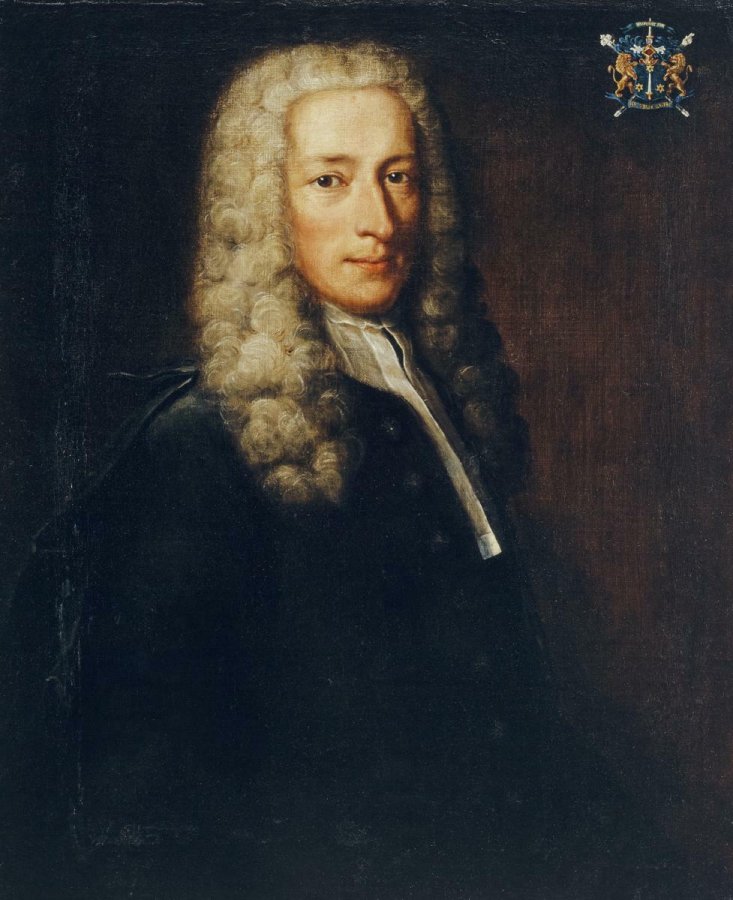
X. Noble Jean Galiffe
* From 1758 till his death he held the office also of ‘Seigneur commissur le noble exercise de l’Arquebus’ which was always filled by one of the first magistrates of the Republic. It was on his election that he suspended to the Great Prize Cup the gold medal previously referred to (1758). During the French Revolution it was kept in safety and was restored to the Society by the grand-son of the donor, after the Restoration of 1814 (Archives de la Societe de l’Arauebuse, collected by Sigismond Coutan, Geneva, 1872, pages 144-149 and 170-180).
At that time several of the properties belonging to the family had changed hands, but in the enumeration of the estate of deceased Syndic Jean Galiffe, one finds mentioned his large house situated between the Bourg-de-Four and the Rue des Belles-Filles, which now belongs to Jequier family, the domain of Chatelaine, now Campagne Cayla, the campagne de Trainaut, sold in 1769 to Simon Bertrand, vineyards at Cornavin and a house at Rive.
XI. Barthelemy Galiffe, godson and heir in 1743 of his great-uncle No: Barthelemy de la Rive, who left him among other trinkets, the Bernese gold medal which he won at the battle of Villmergen where he commanded one of the Geneva Companies. Born 28th July 1736, Doctor of Law, elected to the C.C. 1770, Procureur-General 1771, subrogate Chatelain de Peney and St. Victor, (in the absence of the title-holder Augustin de Candolle) State Councillor in 1775, Treasurer-General 1777 to 1779 and 1782 to 1785. He won the praise and esteem even of the opposition*, although he was feared by them as one of the principal leaders of the aristocratic party named ‘Negatifs’, and was in some danger in 1782 when he refused to leave the city during the temporary triumph of the ‘Representants’ (Democrats). He was then one of the Councillors sent in deputation to the three mediating Generals, de Jaucourt, La Marmora and Lentulus. He was against his will proposed as a candidate for the Syndicate in 1779, but being refused by the Bourgeoisie, he obstinately declined to be proposed again on several later occasions when he would certainly have been elected, as he had already been in 1778, Lieutenant de la Garde, an office which usually was filled by retired Syndics. He was also Captain in the St. Gervais militia 1775, and promoted to the rank of General of the City artillery in 1778. President of most of the Chambers or Commissions of the time, he negotiated with success several secret missions to France, Savoy and especially to Switzerland in 1787.
Dissatisfied with the system of concessions which the Government adopted, he resigned his post of State Councillor in 1790 but remained in the C.C. With him also resigned those of his colleagues who shared his views, viz. No: de la Rive, de Chapeauronge, Falquet, Tronchin, Gourgas and F A Naville, but the last two withdrew their resignation. During the great Revolution, of which he had foreseen the excesses, he retired with his family to his seat of Preverenges, near Morges, which was then Bernese territory. There, although nearly ruined by the unfortunate scheme known as ‘Billets solidaires’, (his share of which he had insisted on paying in full, with a probity little observed by his co-signatories) and afterwards by the pillage and enormous taxes levied by the Revolutionary Committee, by which he was condemned to perpetual exile – he offered the most generous hospitality to the French and Savoyard emigres and also to the Genevese exiles. After the Restoration, the provisional Government offered him twice (1814) to resume his office of State Councillor, of which he would have been the Doyen, but he declined the honour, and died nearly blind on 10th January 1816.
Married on 5th October 1766 to Marie, daughter of No: Pierre Naville, auditor and of Anne Sara de Thellusson, (eldest daughter of No: Messire Isaac de Thellusson, Minister of the Republic of Geneva at the Court of France – sister of Isaac Louis de Thellusson Seigneur de la Gara, of George-Tobie de Thellusson baron of Coppet and Lord of Biere, of the Marquis of Thellusson, Count of Sorcy, of Pierre de Thellusson the author of the famous ‘Testament a substitutions’ which bears his name, and finally of the English branch of Thellusson who became the Lord Rendlesham family). – Died 10th October 1814.
* In justice to him one must say that in accepting again in 1782 the post of Treasurer, he gave a proof of unselfishness: he filled it with delicacy and probity and was a model for his successors: the appointment was given to him without his having asked for it’. Such was the judgment expressed on Barthelemy Galiffe by one of the bitterest opponents of his party, Jacques Grenus. (Etrennes patriotiques 1792, p.73) This praise was certainly impartial, as on several other points Grenus attacks him as bitterly as the other leaders of the aristocratic party.
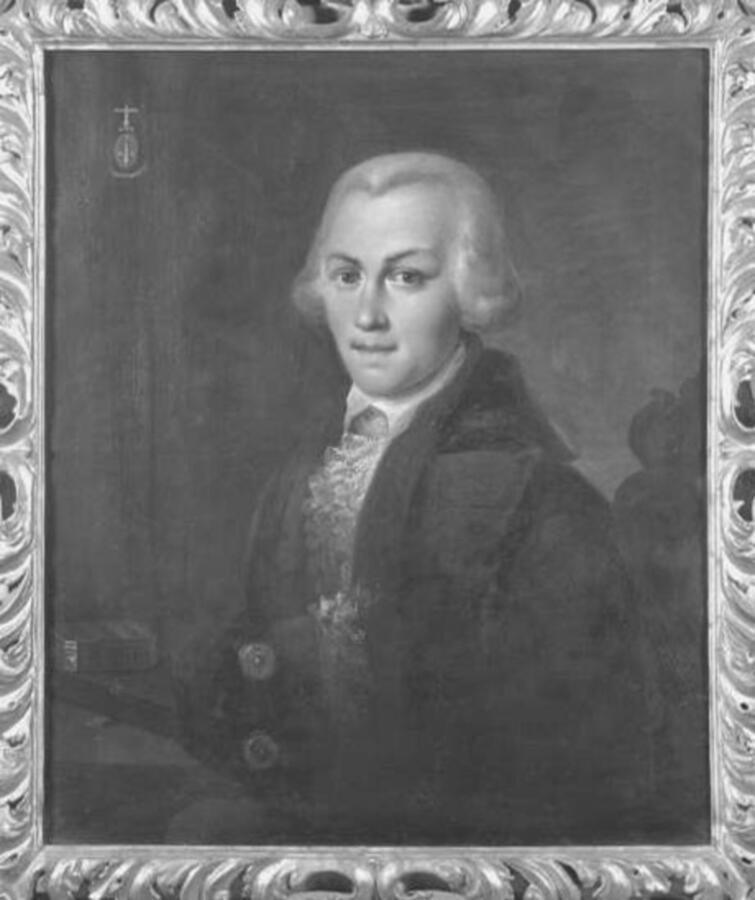
XI. Barthelemy Galiffe
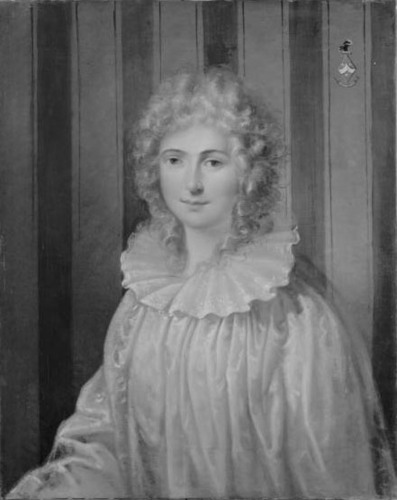
Marie Galiffe (nee Naville)
He Had by her:
(1) Jean Pierre, who follows.
(2) Anne, born 12th March 1769 died 22 March 1832 at her country-house of Plainpalais.
(3) Jaques Augustin (XII) who follows.
(4) Jeanne-Louise Andrienne, born 12th June 1771, god-daughter of her uncle Syndic Isaac-Louis Naville, married 1803 to No. Claude-Gabrielle de Rochette, baron of Salagine, of Beaufort etc., nephew and heir of Count d’Hauteville, Prime-Minister of the King of Sardinia; descendant of the famous President de Rochette, Ambassador of Charles-Emmanuel to Henry IV, the same who negotiated and concluded the peace with Geneva after the ‘Escalade’ in 1602. – De Rochette was Lieutenant-Colonel in the Sardinian service, Commandant of Montmeillan, Knight of St. Maurice and Lazare, etc., died 1837. Their children were
(a) Joseph-Marie Jerome, baron of Rochette, of Beaufort and Salagine, born in 1804, flag-Captain in the Navy with rank of Colonel in the army, afterwards Commandant of Genoa, where he died of cholera the same day as his wife Therese de Villette-Chevron in 1855, having refused to leave his post although authorised to do so before the epidemic. (Left no children). Knight of St. Maurice and Lazare, officer of the orders of the Red Eagle of Prussia, and Legion d’Honneur of France, the latter having been conferred upon him for saving at sea the crew of a French vessel. The Sardinian and Savoy newspapers published most flattering obituary notices of him.
(b) Amelie, married 1838 to Baron Zozime de Bottini de St. Agnes, of Mentone, died April 1877.
(c) Josephine, wife of Baron Gabrielle de Grenaud de la Tour, Major in the Regiment of Savoy, died at Vallieres in 1880 regretted by all the poor of the district, of whom she was the providence. She remained a fervent protestant.
(d) Auguste, in the civil service, died 1861 leaving an only son (Auguste) by his wife Justine Tochon of Thones. All this branch of the de Rochette was domiciled at Rumilly and Vallieres.
(5) Charles-Francois de Galiffe (who was obliged to prove his nobility and to adopt the particle ‘de’, in order to enter as an officer in the Prussian service) born 14th February 1778, god-son of his uncles, Pierre de Thellusson, of London, (the author of the Testament) and his brother Jean-Francois de Thellusson, Syndic. Educated at the Military School of Pfeffel at Colmar, ensign in the regiment of Holvede, afterwards of Manstein later (1803) lieutenant of Grenadiers in the regiment of Wartensleben, in which he distinguished himself at the battle of Auerstedt, won by Davout in 1806. He was one of the few faithful officers who elected to follow to Koenisberg the King now reduced to the position of a poor vassal of Napoleon, in consequence of which he was compelled to reduce his army, C F Galiffe then, like many of his comrades, passed to the service of France, and became Lieutenant, and later Captain in the regiment of La Tour d’Auvergne, at the time lent to the King of Naples for service in Italy. He left Germany in 1806-07, never to return, leaving an illegitimate son who founded there a branch of the same name, of which the present representative Henri, married in 1879 Mademoiselle Lina de Bassewitz.
XII No. Jean Pierre Galiffe, born 23rd September 1767, godson of his grand-father Naville de Thellusson. At the age of seventeen received a commission, and later became 1st Lieutenant in the Swiss Regiment of Chateauvieux, with which he went to Germany, after the massacre of 10th August 1792 and the fall of King Louis XVI, in order to join the army of the princes or of Conde*. Called back to Geneva with the Genevese Companies, he served as Captain in the Swiss and Genevese troops during the siege of Geneva by General de Montesquiou.
* Several documents relating to this episode are found in the ‘Glanures’ of Baron de Grenus, No. 2, page 46. The regiment of Chateauvieux was in garrison at Bitche when the news came of the massacre of the Swiss Guards at the Tuileries, which was to be followed by the recall of the Swiss regiment from the frontier of France to become hostages. Judging that the downfall of the King released them of their oath, but still desirous of serving the cause, the regiment of Chateauvieux crossed the Rhine with arms and baggage to join either the army of the Princes or that of Conde, a decision which was warmly applauded by the Count d’Artois, Colonel-General of the Swiss troops. However, as Geneva was then menaced by the Armee du Midi, afterwards called l’Armee des Alpes, the Geneva officers hastened to return to the defence of their city. Their decision was communicated in a letter dated Landstuhl 25th August 1792 and signed by Baron de Gallatin, Lieutenant Colonel of Infantry – Captains Lect and Trembley; Lieutenant Galiffe, and sub-Lieutenants Rilliet, Puerari and Fatio.
1 D’un Siecle a l’autre, p. 427-430.
Set free by the downfall of the aristocratic Government of Geneva, he took service in the Netherlands and took part in the disastrous campaign of 1794-1795, first as a Volunteer Officer, later as Captain in the Red Hussars of Timmerman, and finally as Aide-de-Camp to the Princes of Orange with whom he went to Germany to organise a new Army. Thence he joined a new English regiment as supernumerary Captain, and later again was appointed Captain in the Rifle Battalion of the Duke of York’s (60th) Regiment. After a service of 10 years in the British Colonies of America, the regiment was recalled to join the Army of the Peninsula (Spain and Portugal) and remained there till the complete expulsion of the French after the battle of Toulouse, 1814. Galiffe had by then been promoted to Lieutenant-Colonel and as such commanded the Vanguard of the famous Picton’s Fighting Brigade. Wounded at Roleia, Talavera-de-la-Reyna, Salamanca, Vittoria and Orthez, he had first been reported killed at Salamanca, where he received no less than five wounds. After the battle of Toulouse, he promptly came on leave to Geneva at the time of the Restoration to offer his military services to his native City. During the Hundred Days he was selected for the command of the second federal Contingent which was in reserve to join the first in Franche-Comte if it had been found necessary. According to a letter of the Duke of Kent, he was even offered the command of one of the new Swiss Regiments in France1, but anyhow he soon re-joined his English regiment with which he returned to the British Colonies of America, but this time as Field-Officer, and only reached his destination after a total ship-wreck on a sand-bank, fortunately not far from the Coast2. He held the Military command of Halifax, and afterwards of Bermuda from 1821 to 1824 when he received the following touching farewell address from the inhabitants of St. George.
2 Letter from the Duke of Kent to Colonel J P Galiffe dated Kensington Palace, 31st May 1819 –
“My dear Colonel…….. I am extremely thankful for your allusion to the situation in which the Duchess was at the time you wrote, and I am sure you will hear with pleasure that she was safely delivered on the 24th instant of a very fine girl and that both mother and infant are doing wonderfully well. Probably the mail by which this goes will convey the first accounts of this to Halifax and I have the vanity to think that it will not be unacceptable to my old Nova Scotia friends who have always entertained a kind remembrance of me. And now I shall take my leave, assuring you of the sentiments of friendly regard with which, I ever am, my dear Colonel, your’s faithfully, Edward”. (The infant here referred to was the future Queen Victoria) – In another letter the Duke writes: “Kensington Palace 16th October 1819 – My dear Colonel…….I read with infinite concern the account of the Shipwreck you experienced in going out, but as all has turned out one may say your escape has been most providential. I am highly pleased to ascertain that you have determined on continuing in the service some time longer, as you done the contrary, I am sure you would have regretted it. I have the satisfaction of adding that the Duchess and her Infant are doing remarkably well, which I know will give you pleasure. Permit me before I conclude to assure you that she unites with me in every possible good wish for your welfare and happiness, while I conclude with sentiments of the most friendly regard at all times, my dear Colonel, Yours’s faithfully, Edward”.
(Bermuda Gazette, 13th September 1824).1
After leaving the Bermuda, Colonel Galiffe finally held the command of Berbice in British Guyana. Never having been in a position to hasten his promotion by purchase, as was the practice in the English Army, he owed all his grades to merit alone. The general peace barring all chances of his being made General he decided to leave the Service and sold his Commission, retaining however his rank in the Army. Returning to Geneva in 1826 he was elected to the Representative Council and died 21st
1 Bermuda Gazette (new series) Volume I. Hamilton, Saturday, September 13, 1824, Number 4. Address, St-George’s, to Lieutenant-Colonel Galiffe C.B. – The following address, which numerously signed by the Inhabitants of Saint-George’s, was on Tuesday last, presented to Lieutenant-Colonel Galiffe C.B., 60 Regt. Commandant, on his leaving these islands: – “Sir, – Having heard that arrangements are made for your removal from the Garrison of Bermuda, we, the undersigned Inhabitants of Saint George’s, are most solicitous to express those feelings of respect and esteem, which the uniform affability, kindness and consistency of your deportment, must necessarily excite, It is with grateful satisfaction, that we advert to the vigilant and careful attention with which you have ever guarded the civil inhabitants of this Town from any of these vexations and tumultuous obtrusions on their tranquillity which are the unfailing effects of military negligence and insubordination – to the promptitude with which you have occasionally afforded the assistance of the troops in works of public utility, – and to your general disposition to please and accommodate the community, so far as a strict and honourable attention to the rules of the service would allow. In taking leave, therefore, of an officer and gentleman, whose friendship we have, for some years, enjoyed, and whose character we so highly appreciate, we cordially unite in wishing you every possible happiness, and assuring you, we shall always remember your command in this Colony with real pleasure, and your departure with sincere regret.” To Lieut. Colonel Galiffe C.B., Commandant, etc., etc., – The following Gentlemen were appointed as a Committee to present the address: John Musson, John Barr, Anthony Aswood, C.-G. Hayward and Henry Folger, Esquires. – To the above Lieut.-Colonel Galiffe was pleased to make the following reply: – Saint-Georges September 13, 1824. “Gentlemen, – I receive with unfeigned pleasure, this mark of esteem from so many respectable Inhabitants of the Town of Saint-George’s. – I am proud to observe that the conduct of the Troops, whilst under my command, has given general satisfaction; it is but justice, however, in me, to observe, that in maintaining discipline, as commandant, I have ever been zealously supported by all officers of the Garrison, and by none more than Major Im Thurn upon whom the essential details of the Regiment necessarily devolved; and I can with confidence assure you that I have ever experienced, in all the officers a corresponding disposition with my own, to render the Inhabitants every assistance in their power, compatible with their duties. – Gentlemen, I feel myself inadequate altogether to express the sentiments of kind remembrance and esteem I shall ever cherish towards you; and I am sure you will give me credit for sincerity, when I say that I shall feel sincere interest in your welfare and happiness; and that I shall ever recollect with pleasure and gratitude the many marks of friendly attention and esteem I have constantly received from the majority of the respectable Inhabitants of Saint-Georges. – I have the honour to be, Gentlemen, your most obedient humble servant John Galiffe Lieut. Col. 60th Commandant.” – Un peu plus loin : “In our present number will be found an address, which on Tuesday last was presented by the Inhabitants of Saint-Georges to Lieut. Col. Galiffe C.B. 60th Regt. Commandant. – As we conceive it a duty incumbent on us to advert to the characters of public men, we cannot allow this address to pass unnoticed; and, at the same time, cannot refrain from expressing our regret at the departure of Colonel Galiffe from this Colony. In his official capacity he used every possible exertion to promote the comfort of the Inhabitants; and as a member of Society, he was highly esteemed. Of the encomiums contained in the address, we conceive he is well deserving; and it would indeed be gratifying could we say on every similar occasion as we do on this: Praise has been bestowed on whom it is due!”
November 1847. His decorations included the Military Order of the Bath, the gold Cross of the Four-Battles, the gold Medal of Vittoria, and after his death the belated Medal of the Peninsular War, with all the clasps which were not already on his previous decorations and which Queen Victoria herself ordered to be presented to his heirs.* The Commission as Officer granted to his son John Frederic in 1839 was also due to the Royal favour, the request being supported it is true by all his old brother officers, but not as a matter of right, Col Galiffe having sold his Commission. Married 10th November 1814 or the 31st March 1815 at Saint Stephen’s Church Bristol, Catherine daughter of John Peter Mathis of Cork, and of Catherine Frances Holmes, also of Cork, Ireland. The mother being British, she conferred that nationality on all that branch of the Galiffe family.
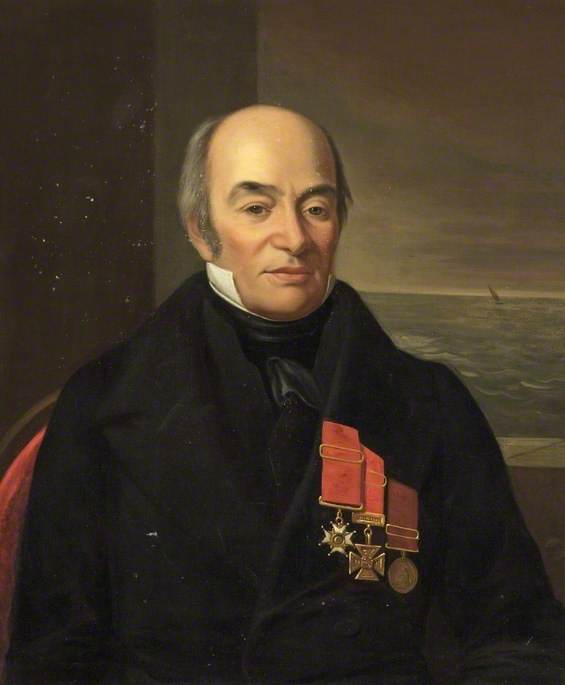
XII. Jean (John) Pierre Galiffe
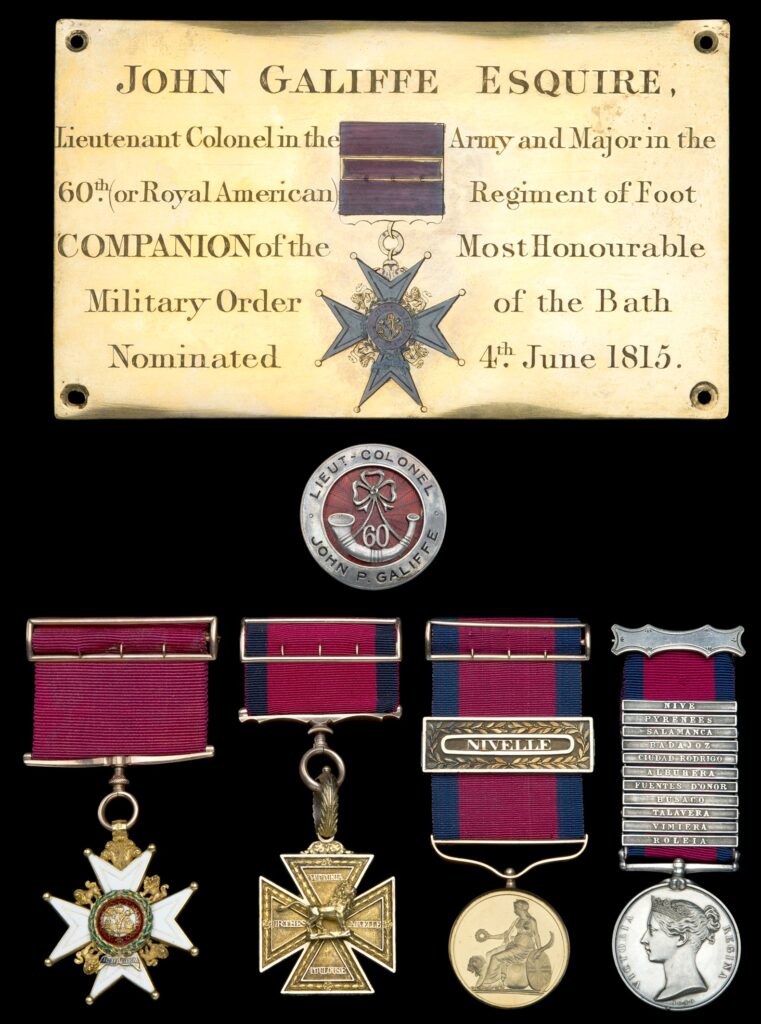
Colonel J P Galiffe CB of the 5th Battalion of the 60th Regiment was the most decorated British officer of the Peninsular War received 16 awards for the battles, including the Gold Cross, Gold Medal & after his death the GSM with 11 Clasps.
He had by her:
(1) Catherine-Anna, born 12th July 1815, Isle of Wight, died spinster, at Geneva 1871.
(2) Marie-Margaret, born 14th July 1817, at Gibraltar, married at the Legation of Berne, to John William Spencer Prinsep, of India and Geneva – died without issue 5th October 1865.
(3) James-Victor-Gaifre, born 17th February 1819, Isle of Wight, godson of General Victor de Constant de Repecque, one of the oldest and best friends of his father; died 1st August 1819 at Halifax.
(4) John Frederic, who follows:
(5) Amelia-Frances (Fanny) born at Plainpalais, Geneva, 7th February 1828, god-daughter of her aunt A. F. Galiffe-Pictet married 27th April 1864 at Ootacamund to Colonel Edward Money Clement Walker, 30th Native Infantry, had issue Claud, died India 1871? And Lawrence (Laurie) Richard Gaifre Clement born 18th October 1871 (died Bangalore 27th February 1895. Lt. and Adjt 8th Regt M.I.) Fanny Galiffe died at Bangalore 17th December 1898, her husband having predeceased her.
* U.S. Club, London 17th February 1849: “My dear Mrs Galiffe, I enclose herewith the long expected testimonial to the distinguished services of our poor dear defunct Colonel which Lord Fitzroy Somerset (Field Marshal 1st Barron Raglan) desires me to present to his family from Her Majesty. It is worthy a place among those other badges which must ever reflect honour on his name. I write in haste as I am afraid of its not being delivered before the bearer leaves town. With best regards to all, Sincerely yours, Th. M. Williams Colonel.” (Shortly after promoted to General).
The Journal de Geneve of 29th Novemebr 1847 in an obituary notice says: “Gifted with all the military virtues, eminently brave and kind, he was beloved by all his subordinates and soldiers, and esteemed by his chiefs : his intrepidity was proverbial, and his distinguished deeds on nineteen battle-fields, etc., etc,
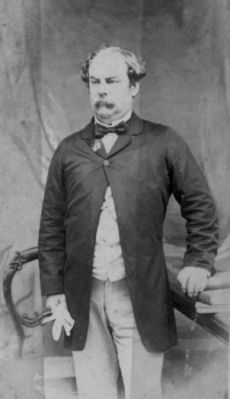
XIII. John-Frederic Galiffe – Alongside is his Sutlej medal with clasps for Ferozeshuhur & Sabraon during the first Sikh War were he served with the 29th Regt.
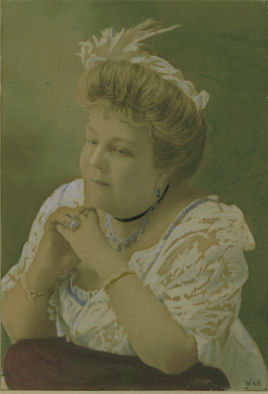
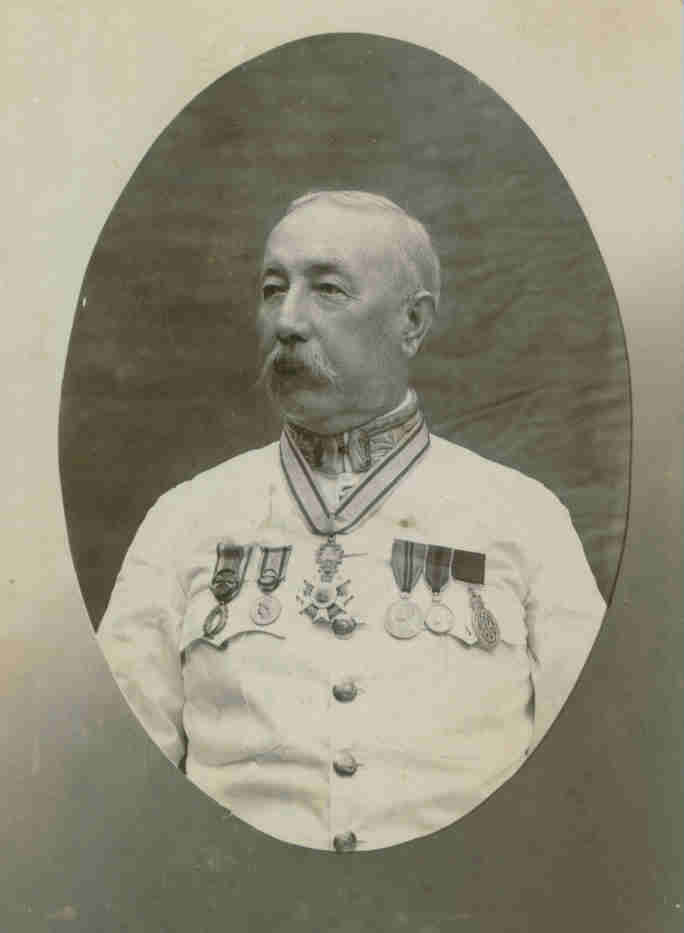
Eugenie-Amelia-Frederica Galiffe Deane
Lieutenant Colonel Augustus Henry Deane C.I.E
XIII. John-Frederic Galiffe, born 19th November 1821, the Bermudas, godson of
Major Im-Thurn of Schaffhausen, Switzerland, Major in the 60th Regt British Army. – Ensign 75th Regt at the Cape of Good Hope, with which he made the Kaffir campaign, afterwards 1st Lieutenant 29th Regt in which he distinguished himself during the Sikh War. – War Medal with clasps Sobraon and Chillianwallah. After the peace he left the Army, and joined the East India Co’s service. He held high office in Calcutta as a Magistrate, Superintendent of Police and Supervisor of Canals; he was responsible for collecting the toll from vessels plying the Beliaghata Canal. Retired, and died 26th March 1878 at Chandernagore; he was buried on the 27th March 1878 in Chinsurah Cemetery. Married at Calcutta, 12th September 1849, Charlotte Campbell (died at Bedford 31st January 1894) by whom he had:
(1) Katherine (Kate) Levina, Born 18th August 1850; baptised 10th November 1850 at Agra. Married the son of William Houghton Allen* – Major General Frederic Allen, Bengal Staff Corps on the 10th December 1867 at Meerat. Their son Reginald (Galiffe) Allen was born in 1870 and died in Lagos on the 24th of January 1902. Their second son Frederic Charles Edward Dean Allen (Little Freddie) was born on the 13th of July 1878 at Barrackpore and died in Bedford on the 20th November 1886 and is buried between his mother and father. Katherine died in Bedford on the 19th January 1899. Major General Allen died in Bedford on the 8th of May 1901.
(2) John Walter Wynne, who follows:
(3) Blanche Margarete Julia, married first on the 12th March 1847 to Arthur Mockett at French Rocks, Madras; second to George Brookes, died May 1913 at Bedford.
(4) Eugenie-Amelia-Frederica, born 4th November 1856 and baptised 21st December 1856 in Calcutta. She married 7th September 1876 at Hassan to Lt Col Augustus Henry Deane C.I.E.** Died —
* William Houghton Allen (April 14, 1788 – January 1855) was a bookseller and publisher in London, England. He was born in New Sleaford, Lincolnshire, England. Nothing is known of his early education, but he was admitted to the London Company of Stationers as a bookseller in 1817. Shortly afterwards, in 1818, he partnered with others to form ‘Black, Kingsbury, Parbury and Allen’. This would evolve into Kingsbury, Parbury, and Allen (William Houghton Allen, Thomas Kingsbury, Charles Parbury) in 1822, and again into Parbury, Allen, and Co. in 1827. In 1835, he struck out on his or, partnering with his sons James Pearce Allen(1818 – 1878) and William Ferneley Allen (1816 – 1877) as ‘W. H. Allen and Company’. As ‘W. H. Allen, the firm established close ties with the British East India Company, who had offices nearby, also on Leadenhall Street. The firm later moved to 12 Waterloo Place. After Allen’s death, the firm went through numerous acquisitions and mergers with the name ‘W.H. Allen’ persevering until 1991, when it was subsumed into Virgin Publishing.
Major General Frederic Allen of the Bengal Staff Corps was buried on the 11th.May 1901 in Bedford alongside his wife Kate and ‘Young Freddie’ his son. His father William Houghton Allen is mentioned above. He was a Churchwarden at Trinity church, Bedford. He was commissioned and promoted as follows:
Sept. 1852 – Commissioned Ensign
Aug. 1854 – Lieutenant
Sept. 1864 – Captain
Sept. 1872 – Major
Sept. 1878 – Lieutenant Colonel
Sept. 1882 – Colonel
Feb. 1885 – Major-General
He served in the Southal Campaign of 1855 – 1856 and with the 18th Bengal Native Infantry during the Bhootan Expedition of 1865.
** A. H. Deane was the third son of Rev B O’M Dean M.A. of the Madras Ecclesiastical Establishment and was born at Geneva in 1851. He arrived in India in 1868 and joined the firm of Messrs Dymes and Co., of which he subsequently became a partner. He had earlier joined a volunteer Corps and on transfer to the head office in Madras, received a Commission in the Madras Volunteer Guards in 1885, which Corps he eventually commanded retiring in 1912 with the rank of Colonel.
He attended the Coronation of King Edward VII in 1902 in Command of the Volunteer Contingent from the Madras Presidency (medal), and commanded the whole of the Volunteer Dismounted Troops at King George V’s Durbar at Delhi (medal). He was appointed Honorary A.D.C. to the Viceroy 1905-10. He was Belgian Consul at Madras from 1904 to 1913, and British Consul at Pondicherry and Karikal from 1913 to 1920. He was a Member of La Societe Acudemique d’Histoire internationale, Paris, receiving their gold medal and Order of Merit; also a Member of L’Academie Latine des Sciences. Arts, et Belles Lettres, receiving their Gold Badge. In 1918 a C.I.E. was conferred upon him.
He retired in 1920 to Switzerland, where he lived until 1926, in which year he and Mrs Deane celebrated their Golden Wedding. Returning to India at the end of 1926, they took up their residence in Bangalore. He was very interested in amateur theatricals, and was for long associated with the Madras A.D.S. While Consul at Pondicherry, where he was most popular in society, his extensive knowledge of French enabled him to take a prominent part in the amateur theatricals and other social gatherings. He died on 25th March 1928 at St Leonard’s Nursing Home, Bangalore after a short illness – he was 76 years of age. He had a son and four daughters, all of whom were married at St George’s Cathedral, Madras. The son, Mr Stanley Deane, was Agent of the Imperial Bank of India in Bangalore and one daughter was resident in Bangalore, Mrs Oakes, wife of Lt-Colonel G. R. Oakes, Indian Army, Retired.
XIV. John Walter Wynne Galiffe, born in England on the 29th October 1851. He arrived in India at the age of 20 years as a Planter in the Malnad District, Mysore, and on retirement, settled in Bangalore where he had a host of friends. He married Eliza Charlotte Margaret Mitchel, of Anglo-Burmese extract, by whom he had three sons and a daughter; all of whom were baptised into the Roman Catholic Church as their mother. A strict Protestant of the Anglican faith, he was a regular attendant of St Marks Church, Bangalore, where he used to read the lesson at evensong. He died on the 9th January 1934 and at his special request he was buried with his favourite aunt, Fanny Walker (nee Galiffe) who died thirty four years before. Walter had the following children:
(1) John Walter Wynne, born on 8th March 1901. Educated at St Joseph’s College, Bangalore. Joined the Dorsetshire (54th) Regiment in 1921 and deployed during the Malabar Rebellion. He travelled from Liverpool on the SS Uppam on the 29th April 1925 for service in Africa. He returned to India and on his discharge from the Army was appointed to the Madras Governor’s Mounted Body Guards. As Warrant Officer-in-Charge, he led his troop at the Independence Day Celebrations in Madras. Whilst still young he married Ivy Webber* from Madras and they settled in that city. He died on the 22nd July 1977 having had no issue.
(2) John Frederic Wynn, who follows:
(3) James Victor Wynn, born 5th September 1904. Educated at St Joseph’s College, Bangalore. Joined the Dorsetshire (54th) Regiment on the 21st March 1921 and served in the regiment for nine years before joining the Madras Police. He died whilst still in service due to an infectious injury.
(4) Frederica Blanche Catherine, born 4th and baptised on the 6th May 1906 at Chickmagalur. She was married on the 2nd May 1930 at Trichinopoly to 29 year old William Alexander McIntosh serving in the Army. She became a widow in 1938 and on the outbreak of War in 1939; she joined a volunteer group, which was of great assistance with the war effort in England at that time. What became of her after the war is unknown.
XV. John Frederic Wynne Galiffe, born at Hassan on 6th September 1903. Educated at St Joseph’s College, Bangalore. At the age of seventeen, he joined the Dorsetshire (54th) Regiment as a Drummer boy, on the 21st March 1921 along with his younger brother Victor. Leaving the Army, he worked for a short time in India House, London before returning to India on the P&O SS Barrabool embarking on the 13May 1932.
* Ivy Galiffe died in Madras during the 1990’s. Her nephew, Arnold George Dorsey, assumed the stage name of ‘Engelbert Humperdinck’, and became a successful singer and entertainer.
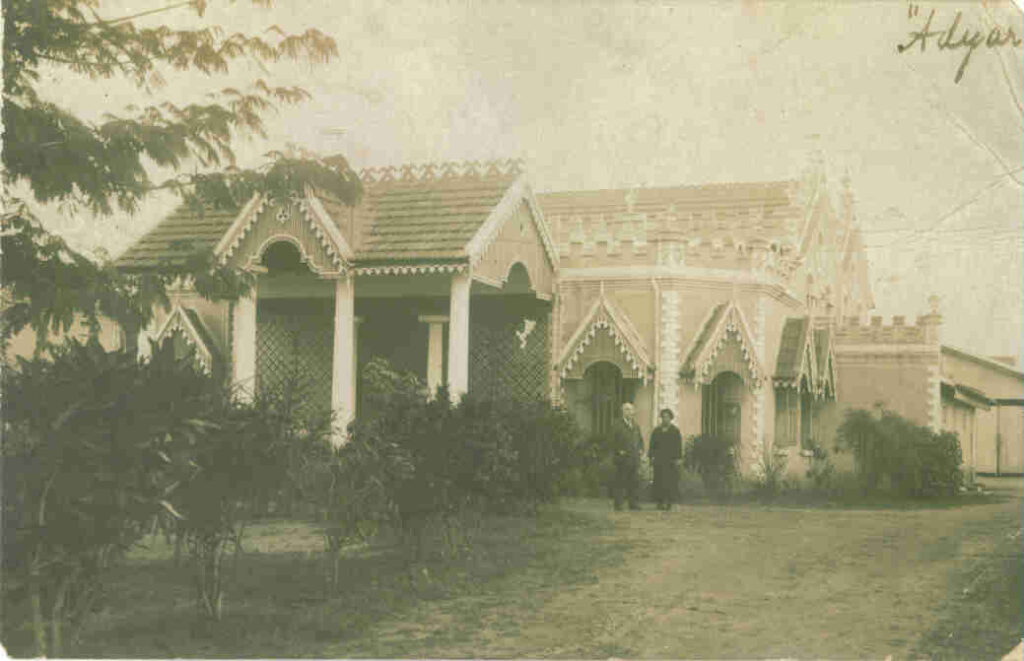
Walter & Eliza Galiffe at home at ‘Adyar’ Langford Road in Bangalore
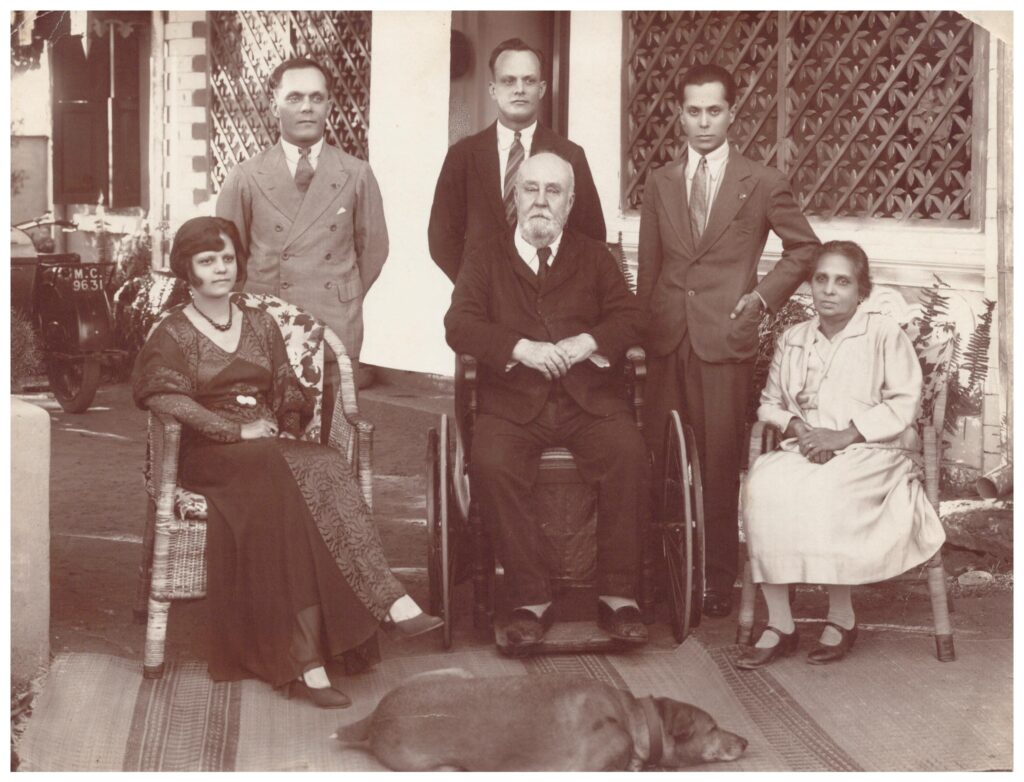
The Galiffe Family at home at Langford Town in Bangalore during the 1920’s
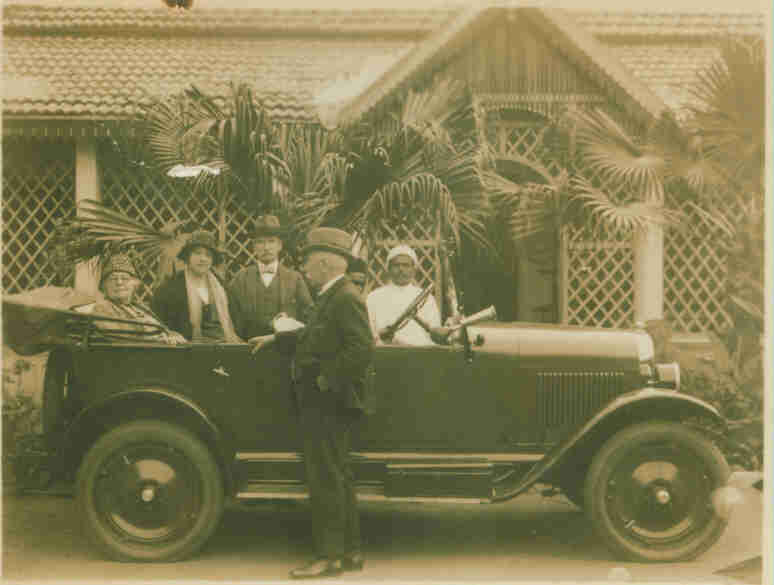
Eugenie-Amelia-Frederica & Col. Henry Dean at home at Cunningham Road in Bangalore.
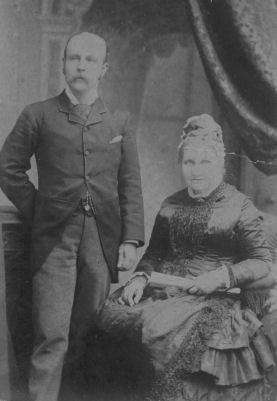
XIV. John Walter Wynne Galiffe with Fanny Galiffe
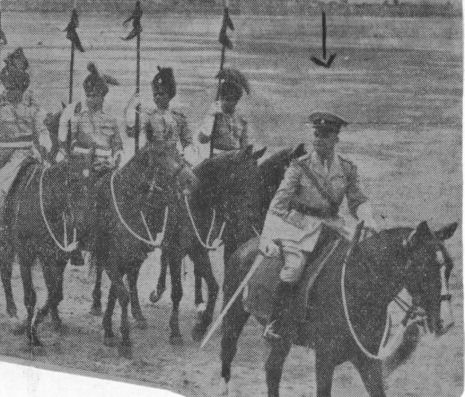
WO1 John Walter Wynne Galiffe
Madras Governor’s Mounted Police Guard
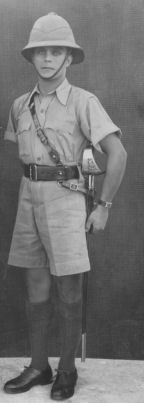
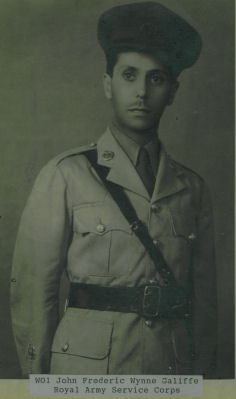
WO1 James Victor Galiffe
Madras Police
XV. WO1 (Superintendent Conductor) John Frederic Wynne Galiffe RASC
He then assumed an appointment to the staff of the Nizam, at Hyderabad Residency, and was employed in the Political Department. He was also to instruct the young Prince with his riding lessons. On the out-break of War he joined the Cameronians (Scottish Rifles) on the 23rd April 1941. He later transferred into the Royal Army Service Corps as a Superintendent Warrant Officer (Class One) and served in the Corps until 1948, some three years following the surrender of Japanese forces in that part of the world. He was awarded the Defence Medal and War Medal 1939/1945 along with four other medals. He returned to Bangalore in 1948 and later with the assistance of his mother, purchased ‘Abalithy’ Estate from Sir Arthur Greenprice. Prior to returning to England in 1978, he divided and sold much of the Estate over a period of years; donating over a hundred acres to the Indian holy man – Vinobai Bavai and his Boodhan movement. The remaining land, mostly forest areas, had been taken by the Indian Government in compliance with their new land laws. He died in London on the 20th August 1992 just short of his 90th year.
He was first married in 1942, at Madras, to Barbara J Fonceca, who along with her brother had been adopted by an uncle and aunt since they were very young children; hence she used the surname Lloyd. The marriage, possibly carried out under the circumstances of the uncertainty of those war years, ended in separation. By this first marriage, he had two children (See below). Barbara remarried Alfred V Matthews in September 1963. She married a further five gentlemen outlived them all and died in Canada on the 30th January 2000*.
Following a separation of over fifteen years, and the death of his mother, he was divorced, and was consciously re-baptised into the Anglican Church, returning the Galiffe family to the Protestant traditions which were forged at the very concept of the new reformed church so many years ago in Geneva. He married for a second time on the 9th April 1956 to Sarah Moses at Bangalore. From this marriage he had a son, born on his fathers 57th birthday.
From his first marriage he had:
(1) Rhona L Miranda, born 17th August 1943, at Madras and baptised a Roman Catholic. Following her parents separation, she was cared for and brought up by her grand uncle and two grand aunts. On leaving school she left India along with her mother, half-brother and sister and immigrated to England. Following service with British embassies abroad, she married Reginald D Osborne in June 1978 at High Peak in Derbyshire and resided a short while in Scotland. Her daughter – Elizabeth was born in 1978 at Tameside, Lancashire.
(2) Aymon Vernon, born 10th September 1946, at Madras and baptised a Roman Catholic. Like his elder sister, he was brought-up by his grand-
* Barbara Galiffe gave her following two children the surname Galiffe. Michael was born on the 17th December 1951 and Cheryn on the 15th February 1954. Cheryn settled in Canada and died 21st October 2015. Michael Galiffe married and settled in Atlantic City, New Jersey; he had one daughter Laura born 22nd July 1979. Michael died 10th July 2017.
uncle and aunts. Following his school years, he attended flight training at the Madras Flying Club and completed his commercial pilot’s licence in 1965. He was married to Marian Constance O’Brien on the 26th September 1970. He left India and immigrated to England in 1974. He died in London on the 22nd of February 2023. He had two children:
(1) Antoinette Mary, born on the 29th August 1971 at Madras. Married Mark Morton. Their daughter Jade Alexander was born on the 12th June 1992 in Croydon.
(2) Joseph Martin, born on the 7th March 1973 at Madras. He was tragically killed at the age of 18 years in a road traffic accident in London on 22nd July 1991.
And from his second marriage:
XVI. Marcus Rodney Galiffe, born on 6th September 1960 at Bangalore. Although baptised a Protestant, in the Anglican faith and in the traditions of the family, he made known that he was an agnostic and firmly maintained that the human mind cannot know anything beyond material phenomena. He departed India in December 1976 and joined the British Army on the 24th October 1977. He learnt to fly at Biggin Hill, Kent, where he obtained his pilot’s licence. Committed first to the Light Division, he transferred into the Corps of the Royal Electrical and Mechanical Engineers and saw service in Germany, Cyprus, Denmark and Northern Ireland. Mobilised from the UK during the Argentine invasion of the Falkland Islands in 1982, he was deployed on the western side of Port Stanley on East Falkland following the surrender. His final appointment was as Chief Clerk to the Royal Scots Dragoon Guards Light Aid Detachment. He departed the Army following advanced flight training to graduate as a commercial pilot and ended 200 years of loyal family service to the British Army. On return to civilian life, he assumed the appointment of Principal of the South Warwickshire Flying School in July 1989. SWFS was the first Flying Training Organisations in the world to be granted the International Standards Organisation Certification for Quality Management Systems in September 1997. He was married on the 3rd August 1991 to Kim Elizabeth Burrows at Stratford-upon-Avon. He was honoured with a framed award by the Air League in 2025 for his service to Aviation and Aerospace in the United Kingdom.
He has two children:
(1) Charlotte Eleanor, born at Banbury on 3rd October 1991. Her godparents were Harold Neil Browne, Marian Constance Galiffe, Philip Knight and Zoe Burrows. She attended the Croft Preparatory School and then Kineton High School. She qualified as a Veterinary Nurse at Moreton Morrel College. In field sports she played hockey for Stratford-upon-Avon Ladies and previously represented Warwickshire Under 15’s. Her equitation events are Dressage and Show Jumping.
(2) Barnaby John, who follows:
XVII. Barnaby John Galiffe, born at Banbury on the 1st November 1995. His god parents were James Gardner, Alfred Ernest Elliott and Jean Wilkes. He attended Ettington Preparatory School before completing his schooling at Kineton High School. He played rugby until his teens for Stratford-upon-Avon and Shipston-on-Stour and competed in equitation events of Dressage and Show Jumping. He now enjoys the sport of Jiu Jitsu.
He attended Loughborough University and graduated with a BSc before establishing a gymnasium and personal training business named ‘Project 23’.
In 2025 he was nominated and received the award of ‘Personal Trainer of the Year’ by the UK National Fitness Awards.
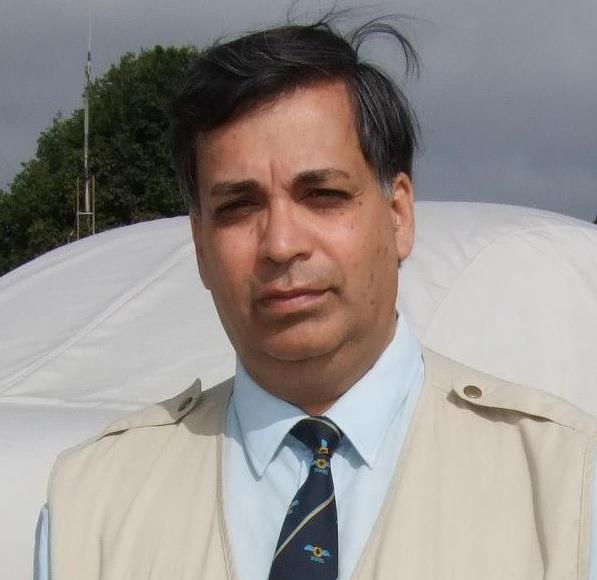
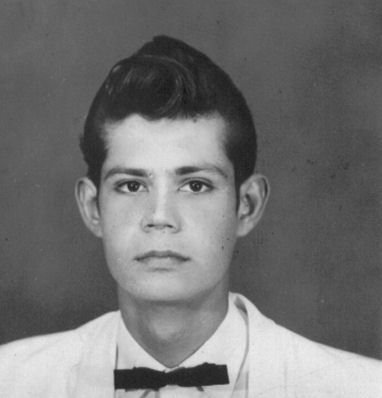
XVI. Marcus Rodney Galiffe Aymon Vernon Galiffe


Charlotte Eleanor Galiffe XVII. Barnaby John Galiffe
Herewith is a continuation of the Genealogy of the Geneve Branch of the Galiffe Family
XII. No: Jaques (James) Augustin Galiffe, (son of Barthelemy Galiffe and Marie Naville, and brother of Colonel Jean-Pierre, No XII as above) born on 7th April 1776 godson of Jaques Rilliet-Plantamour and of Augustin de Candolle – historian and genealogist.
His studies for the magistracy or diplomacy were unfortunately brought to an end by the Revolution which ruined his family and compelled him to emigrate. He then adopted the commercial profession for which he had no vocation, but it was the only one in which he could hope to acquire independent means, by his aptitude for work, and his remarkable gift for languages. Besides Latin and Greek of which he was a master and English which he spoke and wrote as his mother tongue, he knew German, Dutch, Russian, Spanish and Italian, and was conversant with most of the popular dialects of the latter. This enabled him to obtain very important posts in the best banking houses of London, Holland, Germany and Russia, but these occupations did not prevent him from continuing his favourite studies, literature, languages and specially history which his frequent travels gave him opportunities of studying in the principal libraries and archives of Europe.
Deeply attached to his native land, he remained zealous for what was called “the good cause”, the triumph of which could alone restore the independence of Geneva. When therefore Lord Carlisle, in 1798 introduced in Parliament a motion to help the Swiss against the French, Galiffe volunteered to undertake the dangerous task of intermediary. He was then in frequent communication with the principal members of Parliament, the Duke of Portland, Lord Fitzwilliam, Lord Grenville and the famous Pitt, whose support had to be obtained. Finding that negotiations were dragging he did not hesitate to sacrifice his excellent position in London to proceed with a few friends firmly determined to accomplish their object in the best way that circumstances would permit. Adverse news from the theatre of the war stopped him on the way, and he enlisted as a Volunteer in a Militia Corps which was raised in England when a French invasion was expected. – After several years spent in Holland, at Gottingen, Hamburg and Berlin, he entered in 1805 the firm of Baron de Rall, banker of the Imperial Court at St. Petersburg. – M. de Speransky who was then Prime Minister made him tempting offers to enter the Russian Civil Service, but the fear of sacrificing his independence led him to refuse them, as also a proposal to take the direction of a Russian National Bank which was then being discussed. It was during that period of his life that he kept a very interesting correspondence with Mme de Stael.
On receipt of the news that the independence of Geneva was seriously threatened by the return of Napoleon, Galiffe gave up his splendid prospects in Russia to return and enlist as a private in the Geneva contingent, in which he served throughout the campaign of Franche-Comte, first as Staff-secretary and afterwards as an Officer. After the death of his parents, he went to Italy in 1816, and related his travels in his first book, “Italy and its inhabitants” published (in English) in London, which the reviews of the time described as one of the best of its kind.
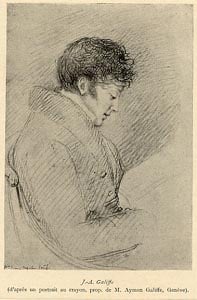
XII. Jaques (James) Augustin Galiffe
In 1820, the brothers Brougham, appointed to defend Queen Carolina, called him twice to Milan, where his indispensable assistance was required by them in the preparation of that famous trial.
Having returned to Geneva where he married and resided till 1841, he set himself to study the history of his country, and worked at it until his death. Appointed to the “Commission des Archives” he undertook by himself, and gratuitously, to sort and classify thousands of documents which had been completely neglected since the Revolution, and which during the foreign occupation had been left in a state of chaos and filth. For over twenty years he persevered in this fatiguing work with a zeal which undermined his health, but neither his illness, nor his infirmities nor even the difficulties placed in his way by the ignorance and contempt of those who should have helped him, could stop him in his self-imposed task. Not only did he reconstitute the Archives of Geneva and save them from certain destruction, but he searched for every item of information necessary to control and complete them, not only in the archives of neighbouring towns but all over Switzerland, in the registers of parishes and castles in Savoy, in the Pays de Gex, at Lyons, Dijon, Paris, Chambery, Turin, Lucca and Florence.
From 1829 to 1831 he published successively as first result of his work, two volumes of “Materials for the history of Geneva” and 2 volumes of “Genealogical Notices on Genevese families” (the third appeared in 1835). This at once established his reputation as an historian of Geneva, but only the experts can realise the labour which these books represent. — The “Letters on the Middle-Ages”, addressed in 1838 to the famous historian Schlosser, are the last historical work which he gave to the public. Schlosser declared in his “Heidelberger Yahrbucher 1839” that it was the best and most learned essay he had read, as regards knowledge and criticism of the subject.
The “Letters written from Paris” had been addressed by Galiffe in 1827 to his intimate friend, Lord Brougham, Chancellor of England. They were published in 1830 at the request of several persons to whom they had been communicated and who had been struck by the wonderful foresight with which the author had anticipated the events and solution of the political situation in France.
Although he filled no public functions in Geneva, except that of Municipal Councillor for the commune of Satigny, he took an active part in all political and religious discussions. Full of sympathy with the principles of Aristocracy yet he condemned them when they were opposed to progress, of which he was a sincere partisan and consequently he sometimes felt himself awkwardly situated at a time when compromise was considered as a doctrine in the political system. Sincere and convinced protestant, although a declared enemy of the Calvinist dogma and system, he was a zealous champion of the liberty of creed, and in 1835 he vehemently opposed the celebration of the Jubilee of the Reformation, which he considered a blunder likely to cause discord between the citizens of the two religions. (Lettres a un Pasteur du Canton, 1835) — The general public is only acquainted with a portion of Galiffe’s works, as the major portion is still unpublished. Besides his writings on all branches of the history of Geneva, he left a large number of sketches, notes, extracts, historical, literary and artistic criticisms, studies on languages, a very learned genealogical notice on the principal houses of the princes and counts of Southern and Central Europe, shedding considerable light on the most obscure period of the Middle-Ages, and lastly a voluminous correspondence. The latter part of his literary legacy is not the least interesting item, as he was in constant communication with the celebrities of many countries. To those already named, Mme de Stael and Lord H Brougham, (Lord Chancellor of England and one of his intimate friends) must be added, Mr Backhouse, Minister of Foreign Affairs, and Lord Grosvenor, afterwards Marquis of Westminster. Among politicians and statesmen may be named Lord Fitzwilliam, Viceroy of Ireland, Lord Carlisle, Lord Palmerston, William Russell, Capo d’Istria, Marquis Luchesini, Ambassador to Prussia, Count Rossi, Baron Stein, Wickham, British Minister with the Army of Princes, M.de Speransky, Prime Minister of Russia, and Count J de Maistre — among historians, Messrs de Barante, Thierry, Mignet, Michelet, Sismondi, Schlosser, Karamzine, Viasemsky, and in Switzerland, de Mulinen, de Grenus, d’Estavayer, de Gingins, de Charriere — among professors, Fellenberg and Bonstetten — among women-authors, Lady Charlotte Bury, Mme de Montolieu, Miss Edgeworth, Mme Necker de Saussure — among musicians, Dusseck, C M de Weber, Steibelt, Field and Abbe Litz who owed him his first letters of recommendation — the poet C Didier whom he was the first to encourage, the famous naturalist Agassiz whom he assisted pecuniarily in the prosecution of his studies, etc., etc. — As historian of Geneva, Galiffe is certainly the pioneer of the modern school of History. His publications, drawn direct from authentic documents shocked many people by the discredit which they seemed to throw on the conventional ideas of the old school, which the dominating party of the time considered as a sort of Palladium. Tired at least of the worries caused by his keen polemics, he preferred to go and settle with his family in Tuscany, without waiting for the political reaction which he had foreseen, and died at Florence 15th December 1853. (See “Notice on the life and works of J A Galiffe” — D’un siecle a l’autre Journal de Geneve 31st December 1853 — Memoires de la Societe d’histoire et d’archeologie 1854 — Les etudes genealogiques a Geneve, by Professor Ritter — Histoire de Geneve, by Gaullieur.)
Married 1st: 20th October 1817, Elizabeth Philippine only daughter of No Jean Antoine de Claparede, President of the Civil Tribunal, and of Alexandrine-Jeanne-Antoinette Dunant died 18th April 1825.
2nd: 26th May 1827, Amelie Francoise, daughter of No: Charles Pictet, Honorary Councillor, plenipotentiary Minister of the Swiss Confederation at the Congress of Vienna, Paris and Turin, and of Sara de Rochemont, died at Florence 14th August 1872.
He had by the first:
(1) Jean-Barthelemy, who follows:
(2) Sophie Anne Marie Catherine, born 16th April 1825 god-daughter of Prince Pierre Andreiowitch Viasemsky, died at Florence 14th November 1841. She showed remarkable dispositions for literature and music.
XIII. Jean (John) Barthelemy Gaifre Galiffe,born at Geneva 31st July 1818, godson of John Thellusson, Lord Rendlesham, of John Backhouse, Minister of Foreign Affairs London, and of Mme Thellusson-Ployard. — Educated at the Fellenberg Institute, Hofwyl; Doctor of Law of the University of Heidelberg 1842, Mayor of the Commune of Satigny 1853-1858. Deputy to the Grand Conseil (Legislative Council) 1854, professor of National history at the Academy of Geneva 1861-65, Consul 1866, and afterwards Consul-General for Denmark with the Swiss Confederation 1883 – represented that power at the 2nd Congress of the Red-Cross at Geneva 1868, and at the Congress of the Universal Postal Union at Berne 1875. – Member (active, honorary or corresponding) of nearly all the historical or archaeological societies of Switzerland, of the National Geneva Institute, of the Royal Committee of National History of Italy, of the Academy of Savoy, and of the Archaeological Society of the Rhenish Provinces, etc., etc., Knight of the Danish order of Danebrog, and of the Italian order of St. Maurice et Lazare. Died 25th February 1890 – Following his father’s footsteps he devoted the greater part of his life to studies of history, archaeology, genealogy and heraldry, in which his native country held the foremost part. Expert as learned as he was exact and conscientious, he left a series of solid works the value of which is as much appreciated abroad as it is in Geneva, and he is justly entitled to be considered as one of the first, and possibly the best known of Geneva’s National Historians.*
Married 1st: 7th April 1849, Gabrielle-Clementine, daughter of Edouard Odier and of Caroline de Thellusson died 28th October 1850.
2nd: on 22nd September 1853, Jaqueline-Marianne Elizabeth, daughter of Spe Jean-Jaques Weber (of the Von Weber, of Schwytz) and of Marie Jaqueline Andrienne Pommier-des Gouttes.
* His principal works are: “Bezancon Hugues” history of the foundation of the independence of Geneva, 1859. – The “Armorial historique genevois, (1859-1862). – Quelques pages d’histoire exact (1862) Nouvelles pages d’histoire exacte (1863) Geneve historique et Archeologique (1869-1872) D’un siecle a l’autre (1877-78) Le Refuge Italien a Geneve (1881) Two Volumes of Genealogical Notices (1859-1866 and 1885) La Chaine Symbolique, (historical study of Free-Masonry 1852) La question et la polemique dano-allemandes (1866) the only French book on the subject. Besides these he published in several reviews and periodicals, German and French, many works of minor importance, but equally appreciated, such as: Tell and Gessler, according to tradition and history (1878) Historical geography of the Canton of Geneva (1882) Les Allmenden (1885) Medailles militaires Suisses au XIX eme siecle (1885) Relation des evenements du 7th Octobre 1846 (1890), Le probleme de l’Eveche de Nyon (1890) “Geneve delivree”, a comedy composed in 1662 by Chapuzean, and “Il sacco di Roma nel 1527” published in collaboration with the Elzevirian Printer Fick. Excellent musician, very much appreciated in the artistic world by his profound knowledge of musical literature and of the old masters, he was also the author of a history of modern music, published in the Biblotheque Universelle 1857.
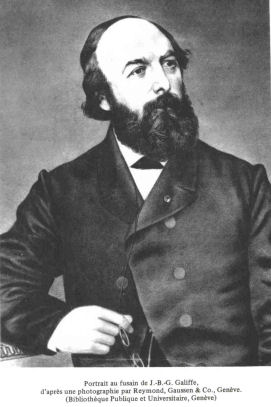
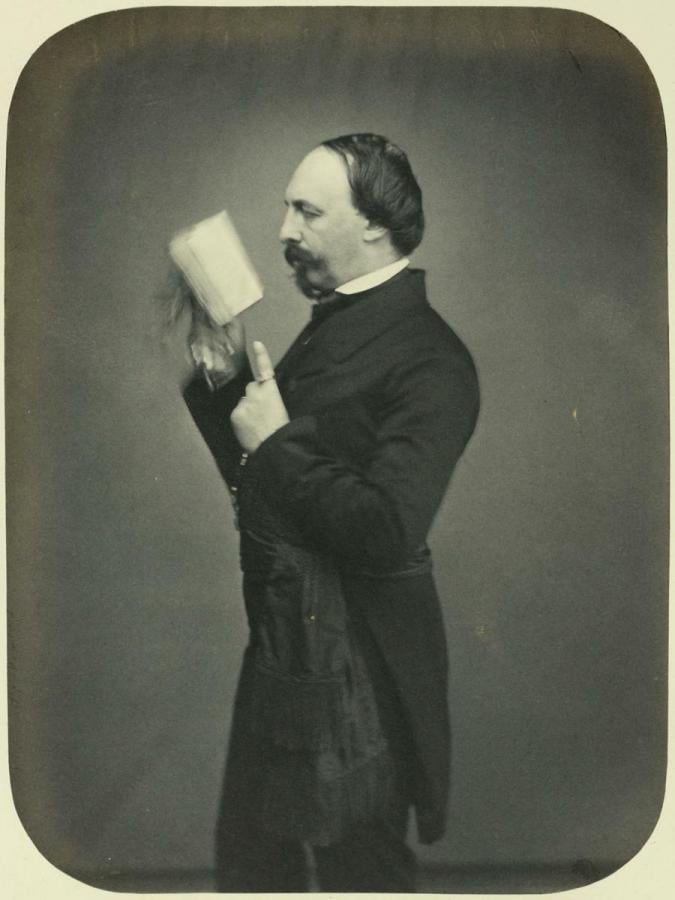
XIII. Dr. Jean (John) Barthelemy Gaifre Galiffe
He had by the first:
(1) Jeanne-Amelie Laurence, born 5th June 1850, married 18th
June 1875 to Victor, son of Adrien Briere, of Yverdon, and of Augusta de Felice – Doctor of Medicine, deputy to the Grand Conseil du Canton de Vaud, Knight of the Crown of Prussia, decorated with the Prussian Medal in the war of 1870.
And by the second:
(2) Elize-Hugonine Marie (Biche), born 9th June 1855, married 8th April 1884 to Jean David Henri, son of Jean David Henry Lombard, of Nimes, and of Claire-Helene Jalabert (sister of the famous painter Charles Jalabert) settled at Valence, Spain.
(3) Gustave-Amedee (Aymon) Gaifre Galiffe, born 30th September 1856, licentiate of law and of social and political science, advocate, substitute of the Procureur General 1884, vice-consul (1883) and later Consul of Denmark with the Swiss Confederation 1890, Captain in the Cavalry, afterwards Divisional Colonel, Swiss Army. He died in Geneva on the 29th October 1915.*
(4) Jaques-Francois Leon, born 28th January 1858, died 7th March 1863.
(5) Sophie-Caroline (Lina) Theodora, born at Peicy, 29th July 1864.
* Colonel Aymon Galiffe was the last male representative of the Geneva branch of the family. He was responsible for the 1890 publication of “Notice Genealogique sur La Famille Galiffe” and no doubt translated and compiled the 1916 publication which was printed by Colonel Auguste Deane whilst he was H.B.M’s Consul, Pondicherry.
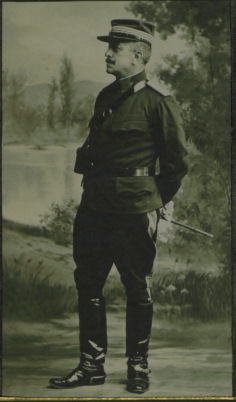
XIV. Colonel Gustave-Amedee (Aymon) Gaifre Galiffe
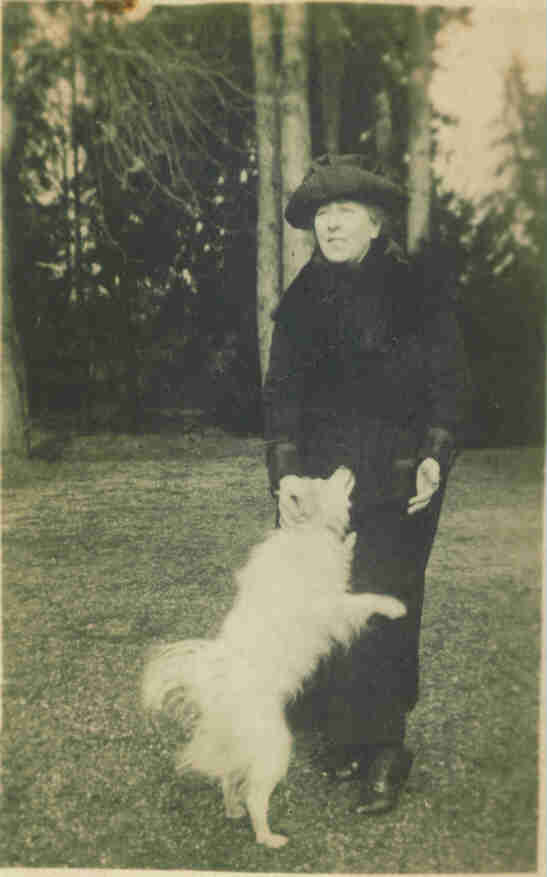
Sophie-Caroline (Lina) Theodora Galiffe
Arms of the Galiffe, de Gaifier and de Gallifet Families
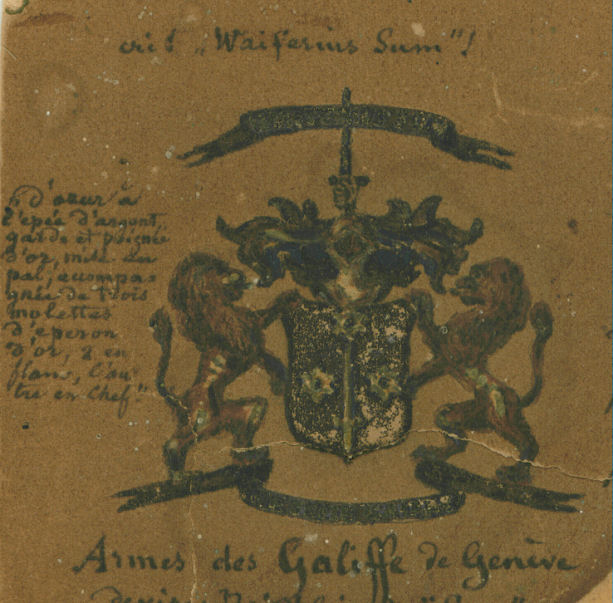
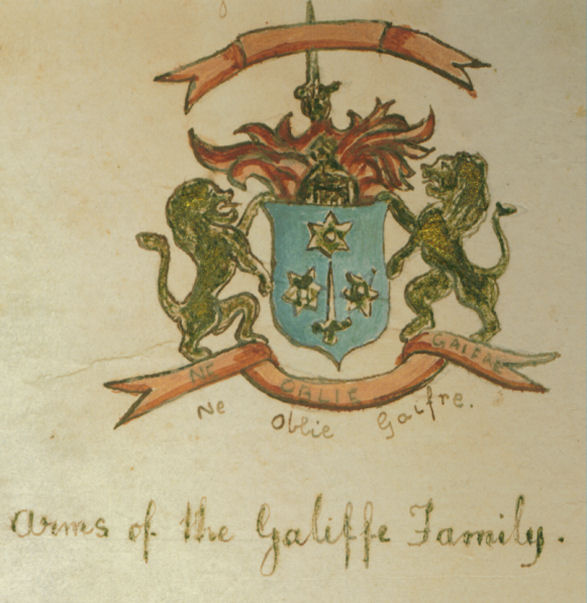
Arms des Galiffe de Geneve Arms of the Galiffe
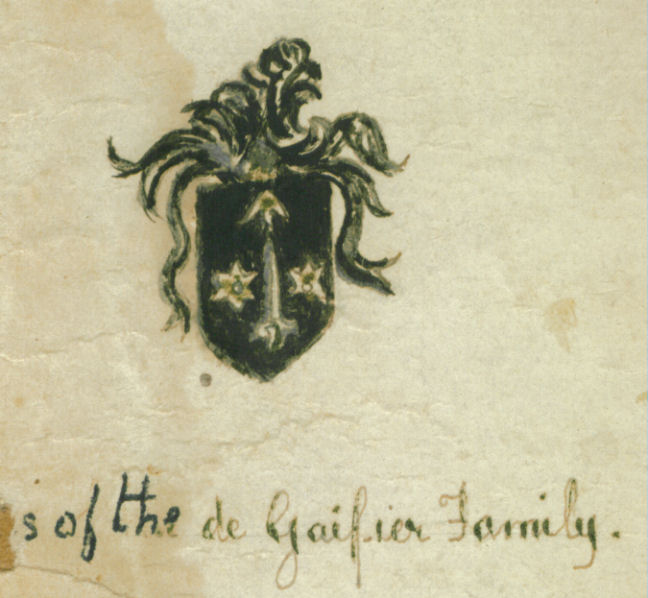
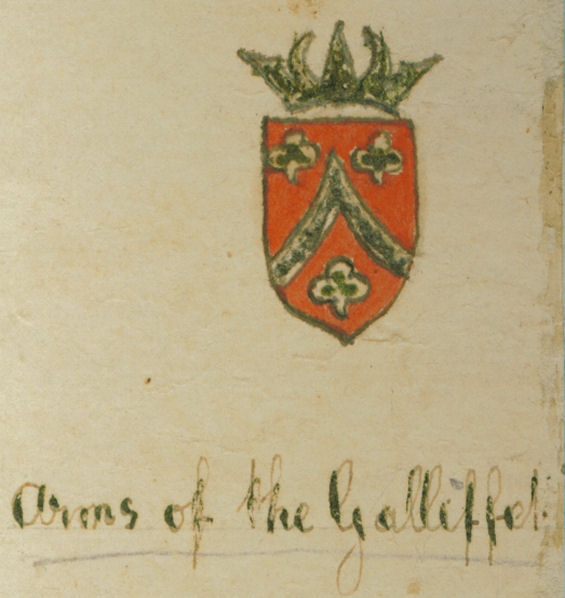
Arms des de Gaifier or Von Gaifier Arms des de Gallifet de Provence
The Arms of the Galiffe family were being used from the late 1300’s at around the time that they may have been devised along with other European noble families.
The arms were displayed on armour, carved on door frames and on family tombs.
Shield: ‘On a blue ground, a silver sword with gold hilt, 3 spur-rowels, one on each side and one above’
Crest: ‘a mailed hand holding a silver dagger with gold handle resting on open-vizored helmet’
War-cry: ‘I am Waifre’
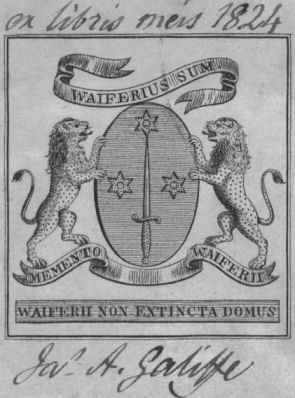
James Augustin Galiffe book Crest Galiffe Arms with supports
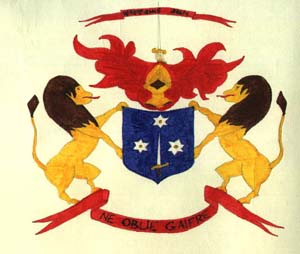
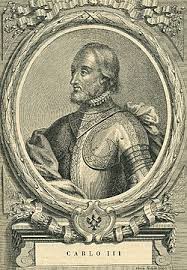
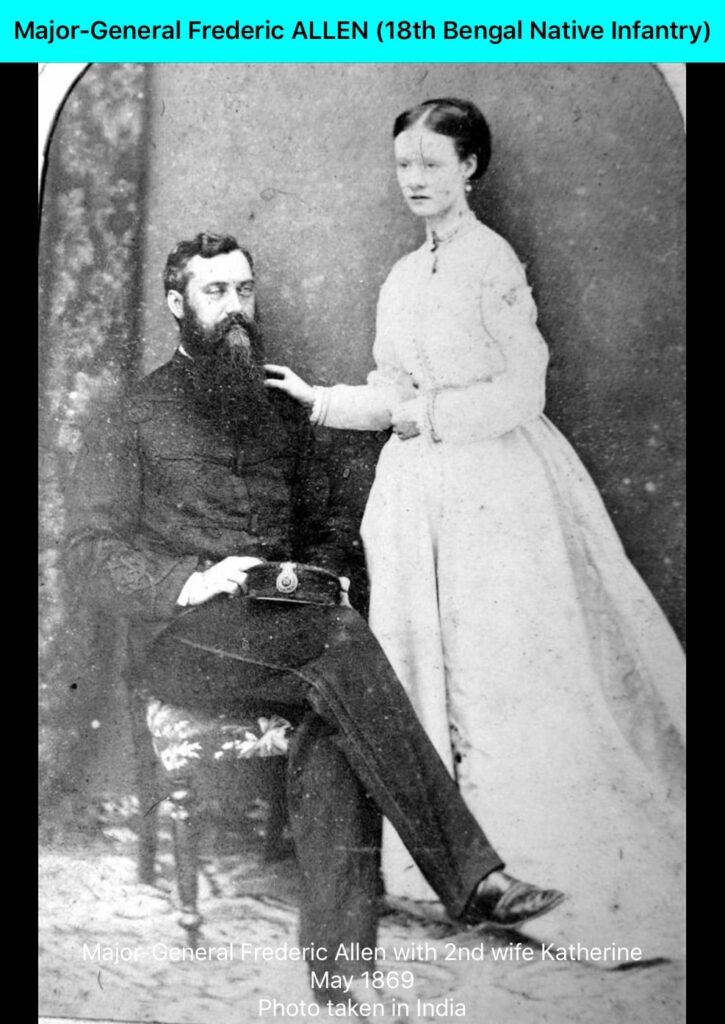
Capt Gen Besançon Hugues (1487 – 1532) Major-General Frederic Allen and
Catherine Levina Galiffe (1850 to 1899)
Cisalpine Gaul (Latin: Gallia Cisalpina, also called Gallia Citerior or Gallia Togata was the name given, especially during the 4th and 3rd centuries BC, to a region of land inhabited by Celts (Gauls), corresponding to what is now most of northern Italy.
After its conquest by the Roman Republic in the 200s BC, it was considered geographically part of Roman Italy but remained administratively separated until 42 BC. It was a Roman province from circa 81 BC until 42 BC, when it was de jure merged into Roman Italy as already planned by Julius Caesar.
Cisalpine means “on this side of the Alps” (from the perspective of the Romans), as opposed to Transalpine Gaul (“on the far side of the Alps”).
Gallia Cisalpina was further subdivided into Gallia Cispadana and Gallia Transpadana, i.e., its portions south and north of the Po River, respectively.
The Roman province of the 1st century BC was bounded on the north and west by the Alps, in the south as far as Placentia by the river Po, and then by the Apennines and the river Rubicon, and in the east by the Adriatic Sea.
In 49 BC, all inhabitants of Cisalpine Gaul received Roman citizenship and eventually the province was divided among four of the eleven regions of Italy: Regio VIII Gallia Cispadana, Regio IX Liguria, Regio X Venetia et Histria, and Regio XI Gallia Transpadana.
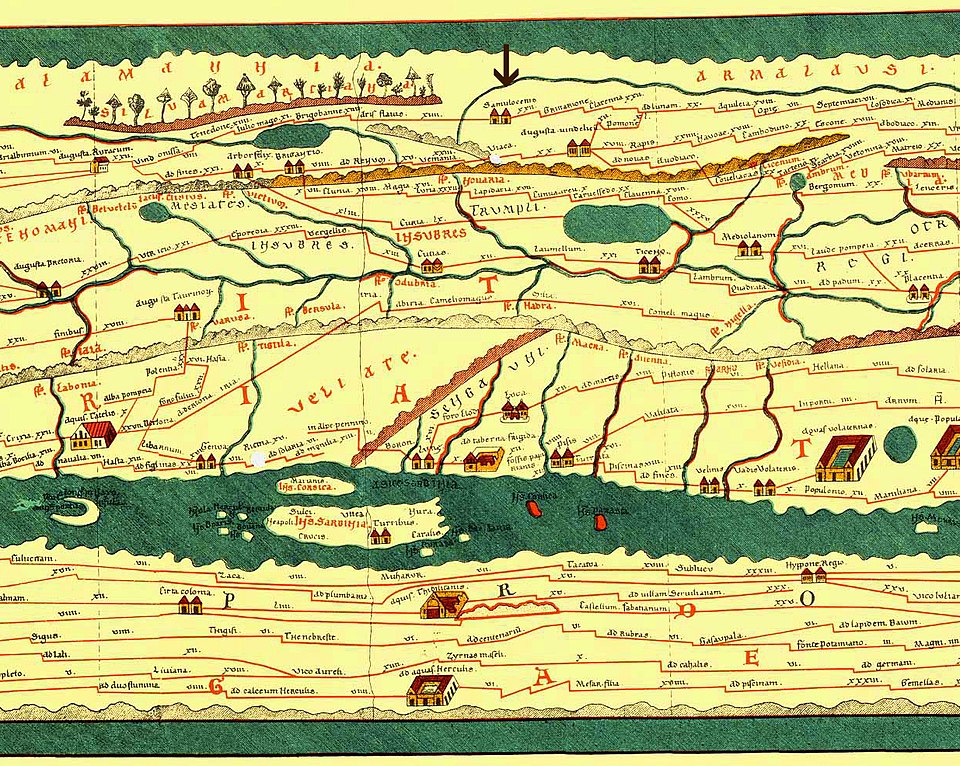
Tabula Peutingeriana
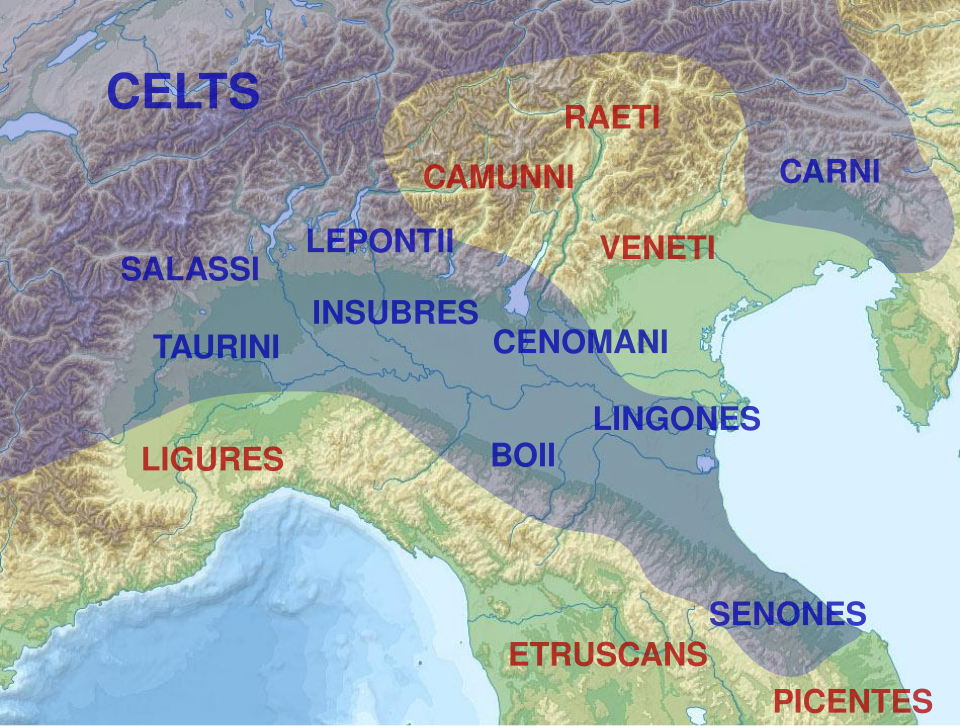
Gallia Cisalpina
A Y-DNA test on M Rodney Galiffe in 2025 – denoted the Haplogroup was R-BY69273
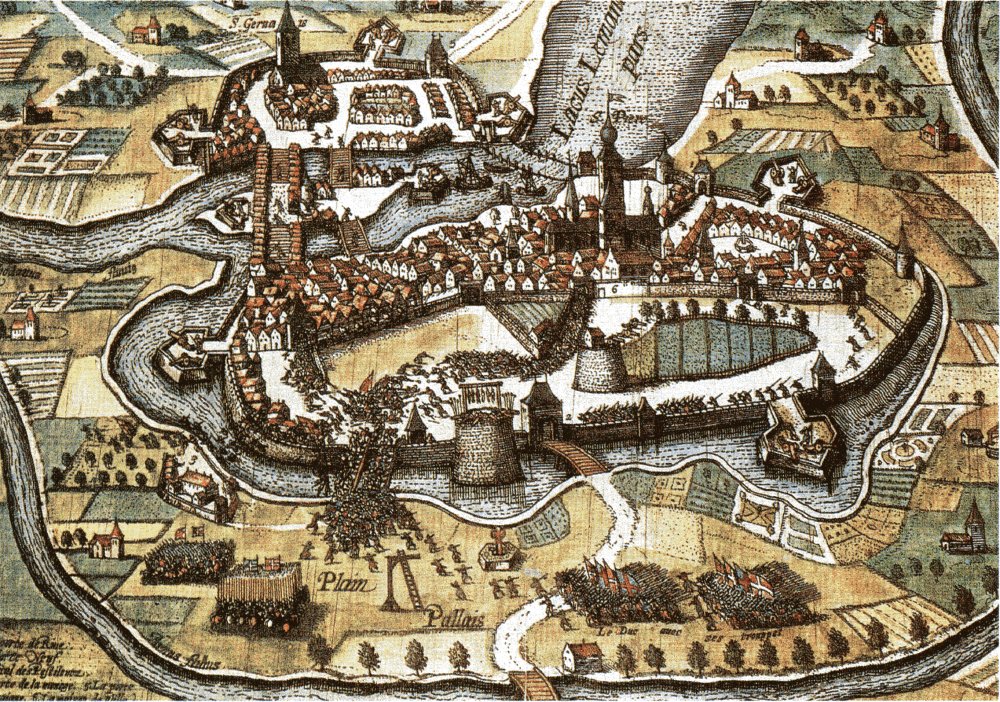
The Walled City of Geneve with the Savoyard Army encamped at Plain Pallias.
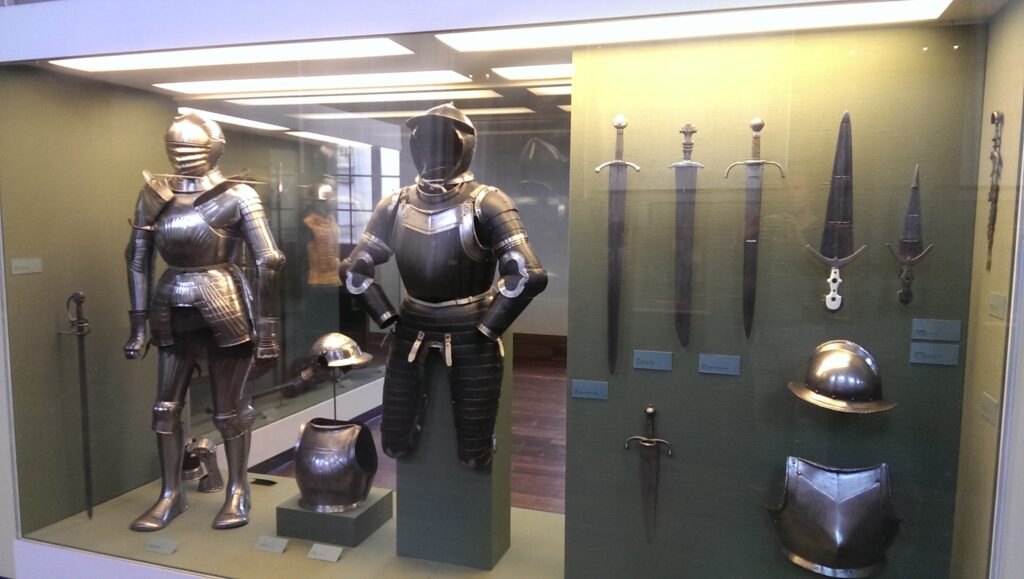
Savoyard Armour used during the Escalade. Savoyard, Soupfre Galiffet was captured tried and executed by the Genevese.
The ‘Escalade’ of Geneve took place at 2 a.m. on the 12th of December 1602, the event now celebrated annually by the town’s people of the battle. The sectarian divide of the time and that of divisions of the family saw the execution of Soupfre, son of Bonaventure Galiffet, from Saint-Laurent, captured whilst attempting to restore Catholicism in the town and the rule of the Savoyards and the Duke of Savoy. The Genevese branch of the Savoyard family now firmly identified themselves with the new Protestant faith and were faithful to their city on this tragic day when the family executed their own kinsman as war was not declared.